ākāśa : Embodied stories
My grandfather started telling a story.
And as I say this, you are compelled to imagine me sitting on a wooden fence, dangling my bare feet. And my age and my eyes, fingers, lips and the colour of my half shirt.
The sentence is so sensual, the words so visceral. You continue letting the tender legs swing along with the tale, precariously dancing with every utterance, making your nerves trifle with every drop of adrenalin, dopamine, cortisol, oxytocin and endorphins. You sweat, and you live the experience in your body where gurgling blood and rushing neurons conjure up a world for you to breathe in your body. Words shape the tale. And the told-tales make us. We pretend to make stories. Stories were there all along like butterflies basking with their wings outstretched.
Ākāśa is an experience, not a gunny bag of commandments. You are initiated to a first-person narrative decolonizing the raconteur and the resonating breath passing through blue conduits into a reverberating space of lucid listeners. The whispering syllables rolling in a rhizomatic directionality often transgress a commune of storytellers in the liminal space. We sell rasa pots in the bazaar of Kathakars, which are but stories themselves brazen and beautiful.
What you expect is not essential. Stories dawn like mist, wet your soft lips unawares, and make romantic advances towards your deeper self. We shall gather those reminiscences like the shepherdess lost in crooning grasses.
Slowly muster your-ness at Shantiniketan.
Janardan Ghosh
Ākāśa Story – performance Residency
Very excited to announce that the 2024 ākāśa story – performance residency workshop will be held at a rural residential space in Shantiniketan, India from Dec 25 – 30, 2024.
Being based on contemporary interpretation application of Indian aesthetics theories namely Natyashastra & Abhinayadarpanam. ĀKĀŚA storytelling workshop has been conducted over the last 8 years and more than 200 storytellers from around the world have participated in our workshops.
The workshop will be conducted by Janardan Ghosh & Sudipto Dawn. Movement based work will be facilitated by Bibhas Mukherjee. We will also have folk storyteller as guest teachers.
Some essential info
You need to arrive in Kolkata by Dec 24. We leave Shantiniketan on Dec 25 morning and the departure from the rural residential space will be on Dec 31 morning.
The closest international and domestic airport to Shantiniketan is Kolkata. It takes about 3-5 hours to drive from Kolkata to Shantiniketan. If you would like to, we can go together to Shantiniketan from Kolkata.
The stay at the rural space in Shantiniketan will be on room sharing basis. Both non veg and veg food options would be available.
Registration form


Contact : sudipta@culturemonks.in
About ākāśa
That stories must have emotions, plots, structures, voice and conflicts – are possibly known to many. ākāśa storytelling ways, are about not only creating the ruptures ‘within’ to emerge with stories, but in the ways to make the stories resonate with the audience – to etch this intercourse as memorable, disruptive and emotional. Based on the Indian aesthetics theories based Natyashastra & Abhinayadarpanam, the workshop seeks to transform on inner selves and ways in which we make and perform stories.
Preface:
Hollywood is the most influential storyteller in the world today. Thereafter we are usurped by the magical stories of Indian Cinema. Therefore, we can claim that Storytelling is still a surviving traditional art. We have been successful in preserving and sustaining a part of intangible heritage and a specific trend of socio-cultural traditions pertaining to humanity across the globe- the art of storytelling. Moreover, it is impossible to survive without stories. It is an irresistible psycho-somatic urge transmitted to our body and mind through genes from our ancestors. We are consistently building stories and dissolving them in our existential matrix. News, corporate talks, gossips, lessons, messages and chats are but stories in various forms satisfying our daily art of living. Plays, cinema, dance, music and such other forms of art are dynamic versions of storytelling. We propose to go back to the basics. Learn the art of storytelling irrespective of your professions and passions.
Storytelling enables experiences to be made meaningful and is thus an important part of our miraculous being. Telling stories assists individuals to engage in sense-making about their experiences, to order events in a coherent fashion, relate events to other events and attribute causality. In short, storytelling is a key way in which memories are organized and articulated. Furthermore, as a ubiquitous, everyday practice, storytelling has other functions, especially in relation to religion, customs, faith, belief and identity: it creates and sustains communities and reproduces culture. It is essential.
The Objective:
The workshop primarily aims to provoke the participants to explore their inner world of creativity and shape a community of people who have shared visions. Secondly, it would help the takers to locate the germ of storytelling in them. The few tenets of our workshop modules:
1. The language of Dreaming
“How far our dreaming is drifting from popular consciousness? Storytellers are engaged, in trying to understand all that makes up our society’s dreaming.”
2. Feeling the story on the page
“A story on a page is like a drum in a museum display case. You can see what it looks like but until the glass is broken, the drum liberated and the skin beaten, you do not know what it sounds like – and of course the music emerging from it will be different according to the temperament and skill of the drummer. The task of contemporary revival storytellers is to free the stories from the page and return them to a fluid, transitory life on the wind.”
3. Links in chains that span centuries
“Traditional storytellers also bear witness to continuity. They are always aware of their marginality, the place of in- between, which is also the place of linking. Storytellers are humble participants in chains of communication which can span vast geographical and temporal distance.”
4. Learning to listen
“The thread which the audience follows and which the storyteller uses to bind them is a current of attentive energy. Listening to the reading of a text demands a more active attention because there is no stopping or going back. Listening to a live storyteller is different again.”
5. New resonances from old metaphors
“At the heart of the stories is the consistent affirmation of the presence and action of numinous forces – helpers and hinderers, witches, dwarfs, giants, gods and goddesses. As these stories unfold, there emerge patterns and sequences of events that are both startling and satisfying as the old language of metaphors finds resonance in the archaic subconscious of the listeners.”
6. Mapping the Inner World
“The relative rarity of resonant image-making in contemporary Indian art is striking. Is our collective dream organ malnourished or has all its energy been sold to the world of advertising where imagination is cynically used – or abused – to conceal rather than reveal the truth in order to sell lies? Probably both. It is as if, in popular consciousness, the vocabulary and grammar of the language of the soul have been forgotten. Maybe the soul itself has been forgotten. Storytelling would revive the language of the soul.”
About the Chief Facilitator
Dr. Janardan Ghosh is an actor & theatre director, storyteller and a playwright from Kolkata, who has been experimenting with both forms and themes in his performances. Indeed much of the past work has explored the themes of spirituality, myth, gender, sexuality and society. He has completed his doctorate in ´Performance and Shri Ramakrishna from the Ramakrishna Mission Vivekananda University. Janardan Ghosh has trained and worked with several international and national theatre and film directors and is a critically acclaimed theatre practitioner and actor of art house cinema in India.
ākāśa performances & news
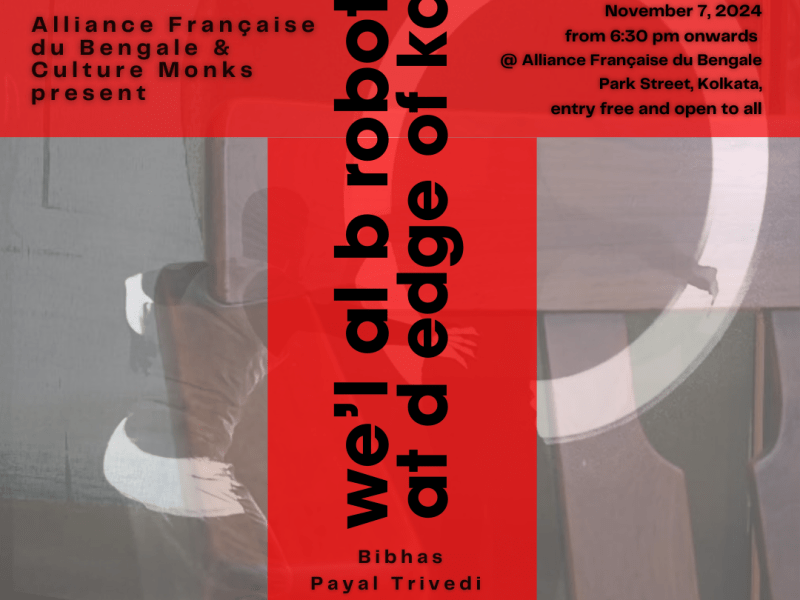
We’l al b robots at d edge of kali
After the Singularity, We’ll All Be Robots Theatre Adda : Park Street sessions presents an experimental performance called “We’l al b robots at d edge of kali” on November 7, from 6:30 pm at…

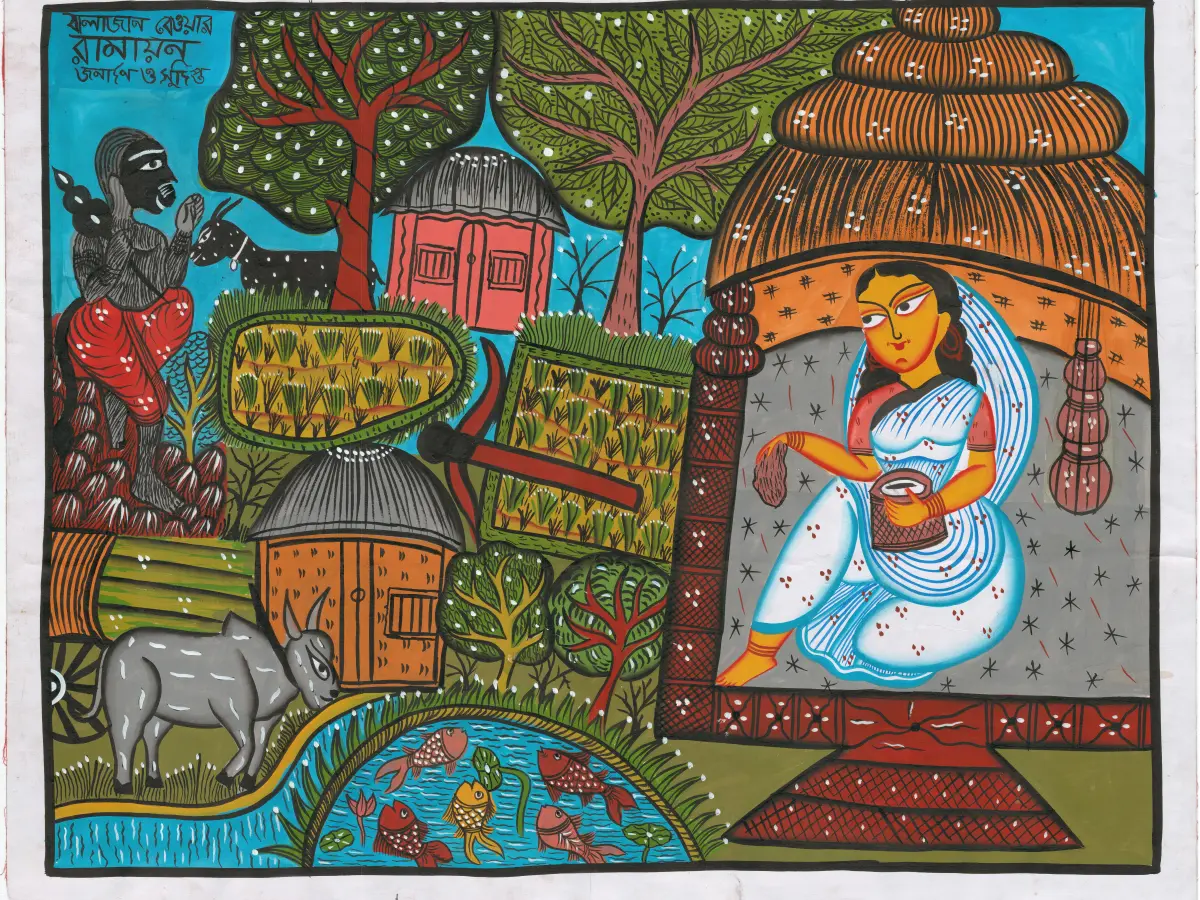
Balajan Beowa’s Ramayana
“How many Ramayanas? Three hundred? Three thousand? Here is one” – A. K. Ramanujan The epic, Ramayana, is a collective heritage of South & South East Asia. This epic exists as religious and…
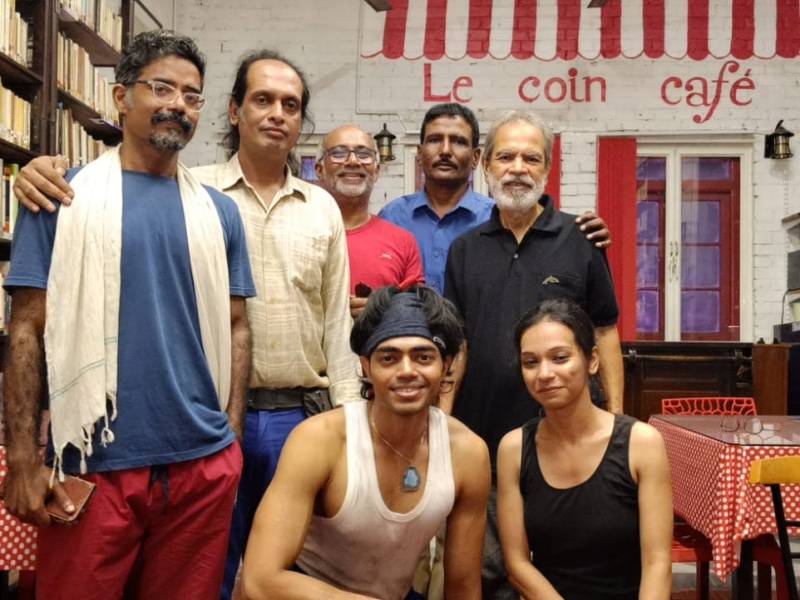
Exploring the Poetics of Space with “an unofficial and contentious epic called NOW”
Theatre Adda : Park Street sessions presents an experimental performance called ” an unofficial and contentious epic called NOW” which is loosely connected to an official ancient epic.

Theatre Adda presents 25 encounters with a stranger
Theatre Adda : Park Street sessions presents a session of experimental performance titled “25 encounters with a stranger”.
digambarim : the body alone with francesca fini
The Italian Embassy Cultural Center, New Delhi, Francesca Fini & Culture Monks, in association with Littlei & Cube Culture, present Digambarim : The Body Alone. Digambarim : The Body Alone, with Francesca Fini is…
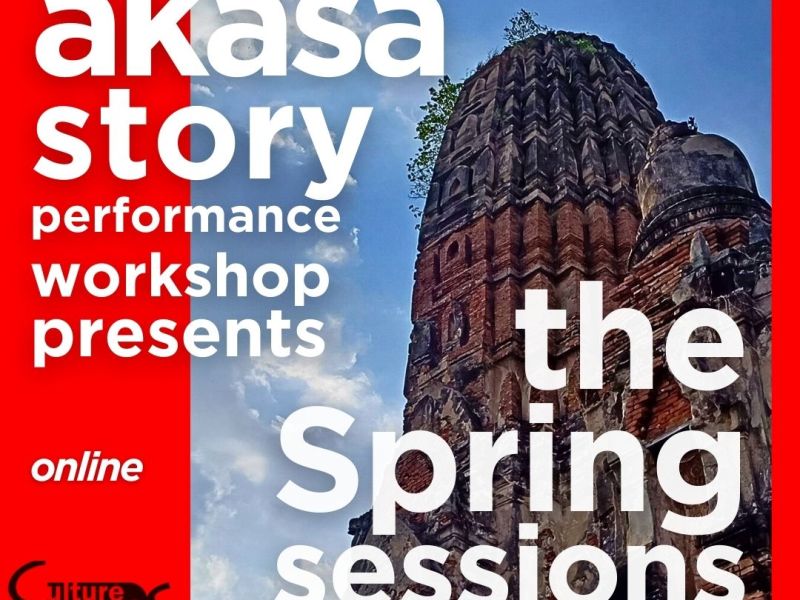
the Spring sessions: ākāśa online story performance workshop
The ākāśa workshop, led by Janardan Ghosh, focuses on performance rituals from Natyshastra, storytelling, and listening techniques for personal and social transformation. For more info, contact +91 8697919308.
Keep reading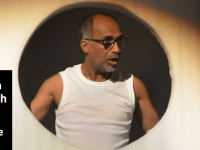
a brief interview with janardan ghosh by rijita chatterjee
A Brief Interview with Janardan Ghosh by Rijita Chatterjee in The Year 2010 for Surrey University Rijita – Mr. Ghosh, first let me start with a very fundamental question: when and…
Keep reading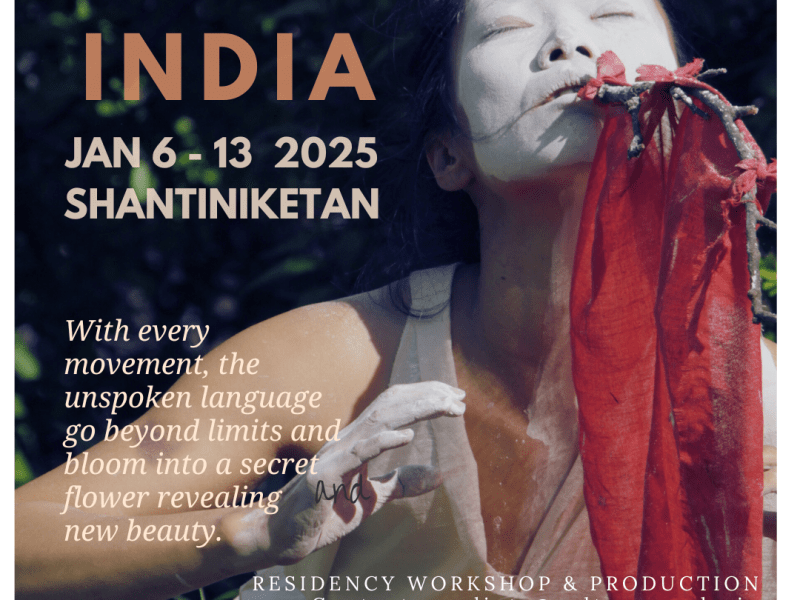
Medi_Motion: Workshop Residency in Shantiniketan, India led by Gio Ju
“The self is only a threshold, a door, a becoming between two multiplicities.”
This is an open call for dancers, movement artists, actors, movement based therapist , theatre practitioners, performance…
Keep reading

