Chulalongkorn University, Thailand, April 2025
“For liberation and utopia are, still, Not Yet.”- Doughlas kellner
I was invited by the Chulalongkorn University to be a part of gathering of artists from Asia to celebrate through stories and performances the festival of Songkran or the Thai New Year. Songkran is also Mesha Sankranti and this coincides with Poila Boishakh which is the start of the Bengali New Year. The following is my reflection on Meshan Sankranti and also a summary of the performance which I along with fellow performers conceptualized and directed in course of my engagement there.

Mesh Sankranti is the time for renewal. Mesha is the raasi and Sankranti means transition. At this time the Sun is transitioning from Meena raasi to Mesha raasi.
Traditionally in Bengal as it was with most of the Hindu tradition it coincides with the spring festivities which are so much part of the social and religious life of Bengal and India. Spring in Asia could be said to last from March to April. In fact it is at the heightened of spring where the onset of the summer breeze is felt. Spring is about Shringara rasa, Sensuality – and maybe the victory of Eros over Thantos. It is also the precursor of the toil and enterprise of the year and uncertain times which is yet. Time for creation of myths and a deep dive into the mystical and sensual practices, fairs, festivals and rituals of Bengal and India which were at odds with those of our western colonizers. I’m blessed to be diving into this Strange Factory of passion, to quote the great mystic Lalon Fakir.
In this season of wonder we assemble to reflect upon the traditions and performative practices connected to the New Year which for me is a great occasion of defamirialization and a way to find the new ways of seeing and experiencing. What is also of great excitement is that in this occasion we can explore both the rituals and performances which, the seminal playwright and theatre worker from Kolkata – Badal Sircar might have said is both about the belief and experiencing, the realm of the divine and the human stage, of prayers for favourable results as well as for our amusement. Incidentally we are celebrating the birth centenary of Badalda and this workshop & performances are also a tribute to him and his practice.

I’m somehow tempted here to quote from the preface written by Douglas Kellner to Herbert Marcuse’s book “Eros & Civilization”, where he summarizes the ideas of Marcuse to put ”erotic energies as the very principle of life and creativity. His linking of aesthetic and erotic dimensions of human experience is also important in both explicating features of an emancipated individual and a non-repressive society.” The rituals, myths and festivities related to the season of Spring, as celebrated and practices in Bengal and generally in India leading to the month of Boisakh are perhaps those aspects of our lives which help us regain the collective experiences of the sensual and the erotic which in turn in the current contexts are needed to resist the hyper repressive society geared for production of violence.
So as we move from chronologically and categorically from one cycle to another, one year to another, from one era to another, we participate and enact a human tradition which is very much an essential need for the body mind, mind and soul – both individual and the collective as it was many centuries. Although as Rabindranath Tagore said in his essay ‘The Stage’, “The owl of Goddess Laxmi has already overshadowed the lotus of Goddess Saraswati; the impact of consumerism has grown deeper and broader than the aesthetics wings”, yet this is our humble attempt to interweave with ether, with the ways of a mystic as our guide. We will like to explore site specificity, as Tagore long ago would have done, where we try to understand the with the memories and the emotional energy associated with a defined place and/or the undefined spaces and in a way transcend the place/ spaces thereby creating the new associations and memories.
The phrase Mesha Sankranti means the cyclical or rhythmical transition in the position of the Sun from Meena raasi into Mesha (Aries) raasi (zodiac sign). The word Sankranti means means transition. The role of rasi has been and still is central in much of the Hindu Bengali Society. Many important life, business, occupational decisions are taken after consulting the Panjika (astrological almanac), which charts the position of celestial bodies in various raasis. Zodiac (raasi), as Dane Rudhyar wrote “is simply the product of the realization by man that experience is a cyclic process, and first of all, that every manifestation of organic life obeys the law of rhythmic alternation.”

Seasons after all are “Small cyclical variations in the shape of Earth’s orbit, its wobble and the angle its axis is tilted play key roles in influencing Earth’s climate. Human lives are connected to these transitions as we are “literally revolving around cycles: series of events that are repeated regularly in the same order. There are hundreds of different types of cycles in our world and in the universe. Some are natural, such as the change of the seasons, annual animal migrations or the circadian rhythms that govern our sleep patterns. Others are human-produced, like growing and harvesting crops, musical rhythms or economic cycles.” In time, the scientific labs backed by its benefactors and its institutional frameworks have successfully reduced the direct relation between shifts in natural phenomenon such as seasons to its effect on human lives and a humanistic and anthropocentric world has emerged. They have successfully also through demonstration and propaganda convinced the majority of people on this planet about the veracity and finality of their project in securing for mankind the perfect world – which follows the laws of science and the rule of law. Hence, we do see that in (modern) urban life the role of rasi and rasa is different than say in the more traditional or (older) villages and communities, for whom raasis and rasas still have significant impact. It is generally considered that humanity is a chronological progress in modernity which is based on science, technology and the is right based. So everything which is thought, done or said is always verified or has to be sanctified by science and law. The role of emotions and sensuality also must follow similar patterns and emotions are often subjugated and is thought to be secondary. Similarly the current paradigm privileges human needs and perspectives above all else.
Any festival or ritual is a disruption in normal lives. It does agitate against the daily time and produces Chaos, which says Dane Rudhyar “is the path to a greater wholeness of being and consciousness a path, transition a process.” So, we can say that each such event or festival is a way to a new consciousness, which is both knowledge and a new way of feeling. This occasion gives us the opportunity to reconnect with our rootedness in a natural world and provides us to listen, express and play in a pool of inter connectedness of culture and traditions, wherein a new consciousness develops and indeed new stories emerge.
A sage – the man of the worldly knowledge is one who deciphers in this chaos a consciousness where he “sees all nature as a cyclic interplay between the ‘lesser wholes’ and the “greater wholes.” The great whole is then the sky realm – the natura naturas, which is the world of ideas and the lesser whole then is the passive or the earthly nature – natura naturata. The sage is the one who tracks the raasis and seeks to explain its effect on earthly matters.
The mystic is then the one who links these two wholes. The mystic poets who created the Rig Veda, which then became the foundation of the Hindu religion, by their powers of beauty in heaven. Soma – that divine nectar stolen by the falcon (Shyen) named Suparna from heaven and bought to this earth, is, the beginning of human life. Nolini Kanta Gupta says, “Soma, the Rasa – psychologically the principle of delight and symbolizes and constitutes the very soul and substance of life.” (soma was the beginning of life (samaveda book page 39) The poet is a mystic with “direct vision, luminous intelligence & the immediate perceptions. They gives birth to the truth. They put the ‘madhurjyo” (sweetness) in humanity. To be in the Kanta bhava – to feel fullness is like to be in madly in love. This love, according to the Vaishnavs, progresses through the stages of Sneha (affection), Mon (focus), Anurag (deep affection and passionate love), Bhava (emotional and spiritual intensity) and Mahabhava (ecstasy). This Mahabhava is identified with Radha who is both the source and fulfilment of love. The climactic union of the The Mahabhava (the source of affection and emotions) with rasaraja (the enjoyer of the emotion – audience, lover, etc) is the highest level of transcendental plane. These are then along the lines of that we try to explore through our akasa story performance practice.
So now about the performance itself in Thailand at Chulalongkorn University on April 9th, 2025: or shall we call it Songkran (Transition)?
The stage was the foyer which lay adjacent to the main auditorium and the black box theatre. This was carefully chosen as I wanted to use this space which was deemed as the in between space – the sort of minimal space, a place of waiting for a while – a really ephemeral space of reception as the performance space. The hues of the ivory walls of the space as a backdrop reminded me of a washed out Basanto and also afforded me to project moving images on it in order to create a portal into another world thus extending the sense of space time. This also meant eventually that the boundaries of the performance space flowed washed onto the shore where the audience would be and hence and the performers in time would improvise and extend the boundaries much like the waves of the sea would.

The two props used for the performance were significant for me. One was a white metal shopping trolley and the other was a rainbow coloured soft ball. The shopping was significant as it such a quintessential part of the urban life. It is what sustains us, it is what is the cause for almost every phenomenon we see today. Shopping on the new year eve (Choritra sale) is also such a significant part of the Poila Bosikakh or Songkran, where one of the integral aspect is that we buy new clothes, books, furniture, furnishing etc and also gifts. The ball was significant – first it’s a play, secondly its rainbow colours reflect the liberal society in Bangkok and of course the liberal nature of the celebrations and performance itself. It is also the shape of the world and it is the human child who plays with the ball much like the anthropocentric world we live in.
The performance had four characters – Honey Thet Htar (the Girl from Burma), Aphinya Ploiwaen (the girl from Siam), Janardan Ghosh (the oracle), & Deepjyoti Gogoi (the folk musician and the instrument maker from upper Ahom) The central two characters were workers in a departmental store or any other shop for that matter. The third character is from Bengal but also he is the oracle, from another transcendental space- a dream world. The fourth character is a folk musician and instrument maker from upper Assam. The central character is a girl from Burma and this play is the coming together of may realms. Of Burma, Thailand, Ahom and Bengal, of Thingyan, Songkran, Bihu and Poila Boisakh. Of Burmese, Thai, Ahomiya, Bengali and English – where the shared history of Burma, Ahom and Bengal emerges. The influence of Buddhism and Hinduism is so strong in all the three places of Thailand, Burma, Ahom and Bengal.
The performance starts with a reflection on the idea of the constant change, the constant movement as a truth of life. The characters reflected on the how knowledge and performance too are like this contact shifting, this spiraling, this changing phenomenon – ephemeral yet lingering. Here the two girls deliver beautifully the lines from the Badal Sircar play – Evam Indrajit while they play throw-ball with the audience thereby paying tribute to the intimate theatre of Badalda. The story starts from a moment in the current crisis in Burma and much like thousands of people, the girl from Burma is violently displaced from her home in Burma and is forced to flee across the border into Thailand where she would work and peace and a friend in Aphinya Ploiwaen. Here she oscillates between the existential world and the dream world – the heavenly world from in which seeks solace and from where Thingyan descends every year onto Earth for the New Years. The characters could easily be nature – trees, the birds, the wind, the water, for they withstand this human violence as much and suffer, yet they renew and fill the world with hope every spring, It is also story of losing everything and then finding hope and friendship and renewing oneself on the eve of Thingyan/Songkran/Bihu/Poila Bosiakh, giving in to the great spirit of Bangkok. The dance of Bhogali Bihu would bring the play to a close. The final act would be the singing of the ‘Winds of Change’ by Scorpions. It was a shout out for those millions of children and youth who are victims of war and violence, it was a collective scream for change, peace and other ways to live in a dialogue of equilibrium with nature. Like every year, let us keep up the hope for liberation, peace and renewal. Let’s celebrate the indigenous, the forgotten, the traditional and the new. Let’s embrace eros, life and nature, fully once more.
Sudipta Dawn
Related Posts
ILOGY praxis presents Monsoon Perspective Online Lab
Monsoon Perspective Online Lab is a thematic edition of iLOGY praxis, an embodied storytelling and performance practice that explores the relationship between memory, self, culture, and ecology through the memories & experience of the monsoon.

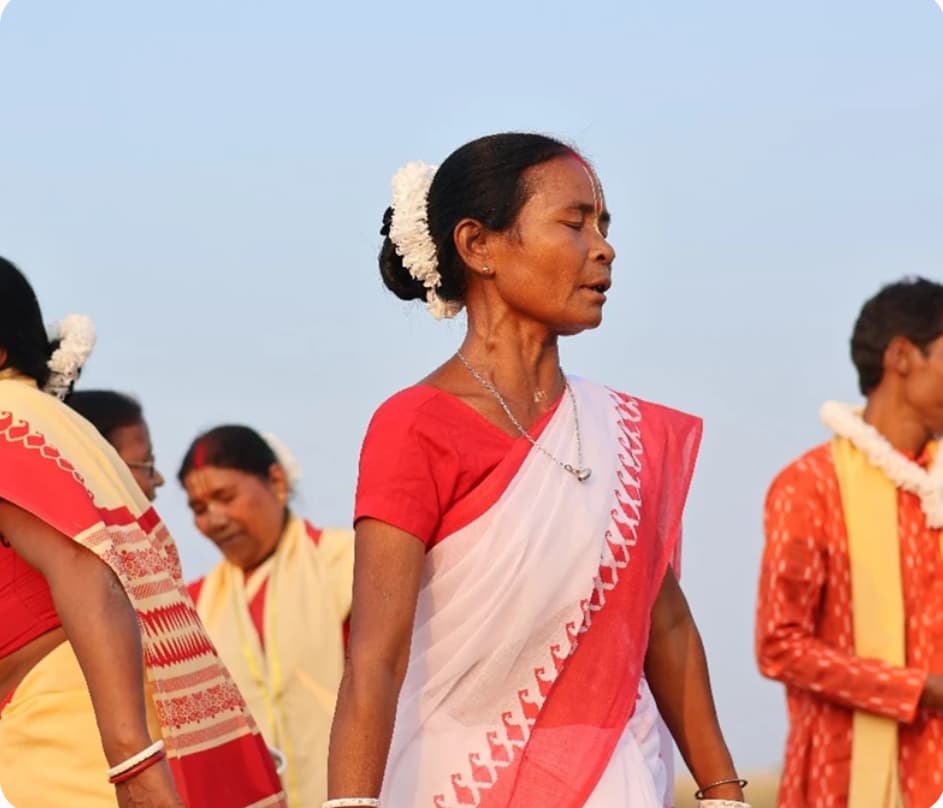
Welcoming a River’s Return
Happy to reproduce here from the website of West Bengal water project an article about a performance research project where we searched for the rituals and culture associated with the rivers of Bengal. This particular instance was a collaboration between students of Oxford University and Culture Monks. Welcoming a River’s Return writen by Susana Higueras…
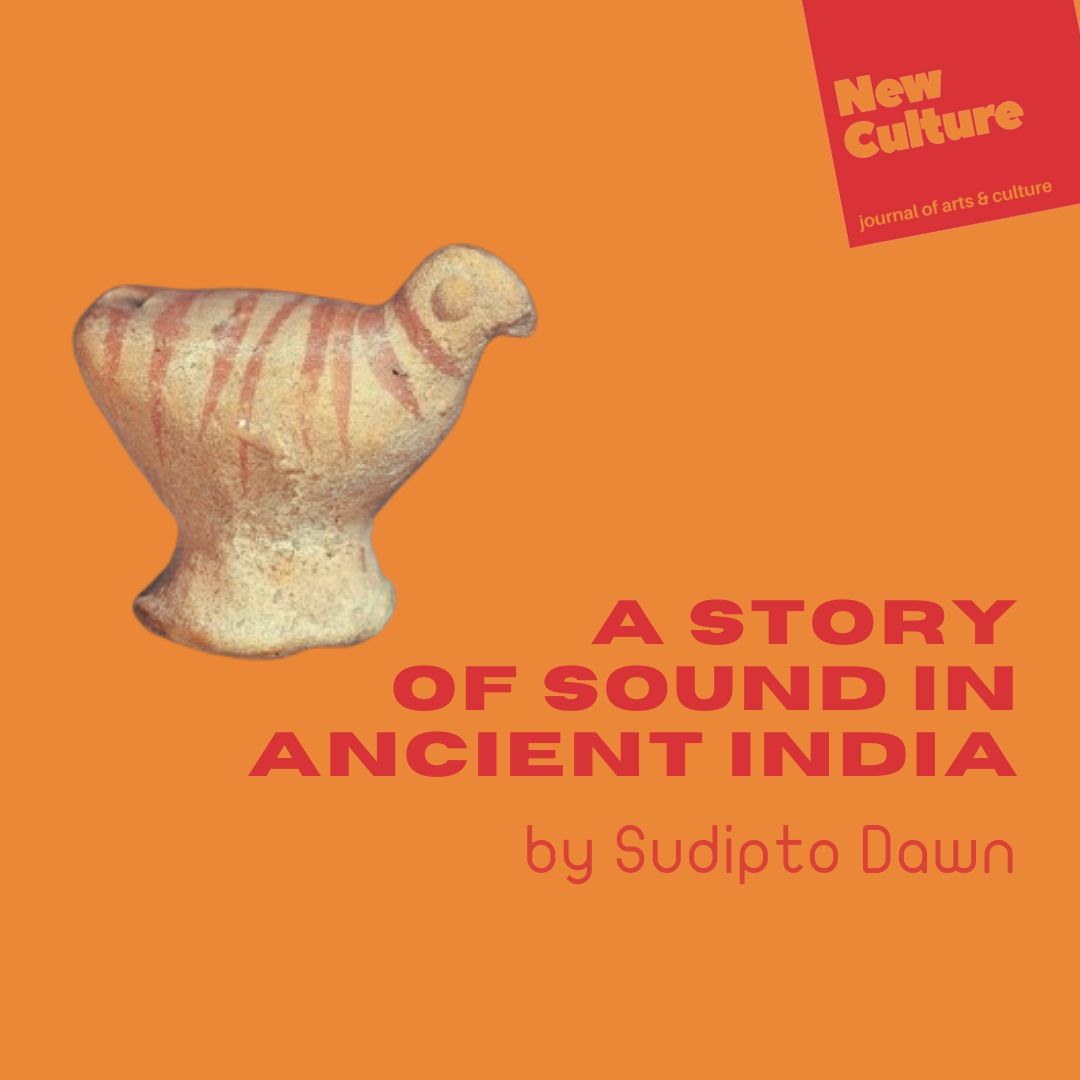
Story of Sound in Ancient India by Sudipta Dawn
Hello! Here i’m sharing from my readings of historical texts of ancient India from the perspective of ‘sound”, tracing the presence of sound in Hindu theology which emerged from the Vedic sources which are primarily the creation of Aryans and later evolved into various practices and rituals which are said to be the result of…
Changing course of Rasa theory from Bharata to Rūpa Goswami by Dr. Janardan Ghosh
The Spiritual Core of Indian Performance: The Progression of Rasa Theory from Bharata to Rūpa Goswami
Shouts & Calls – Report
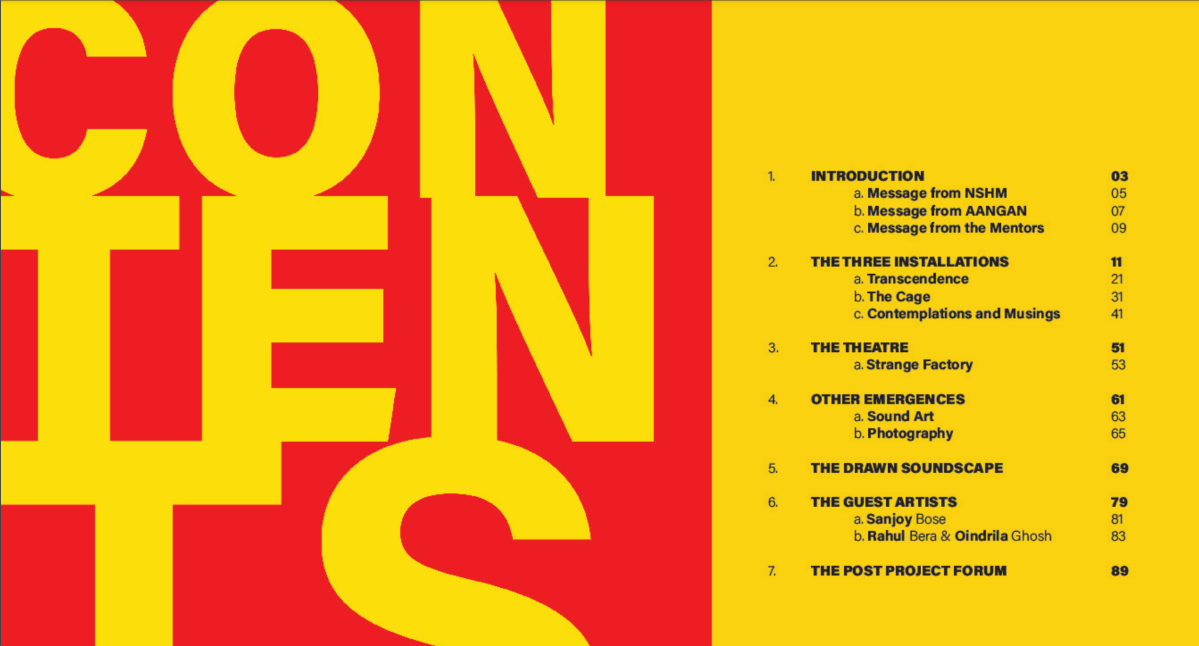
Here is the report of Shouts & Calls which was a multidisciplinary arts project conceptualized and executed by the student of NSHM Knowledge Campus, Kolkata under the mentorship of NSHM Centre of Creative and Performing Arts, AANGAN & Culture Monks represented by Saikat Surai & Sudipta Dawn.


