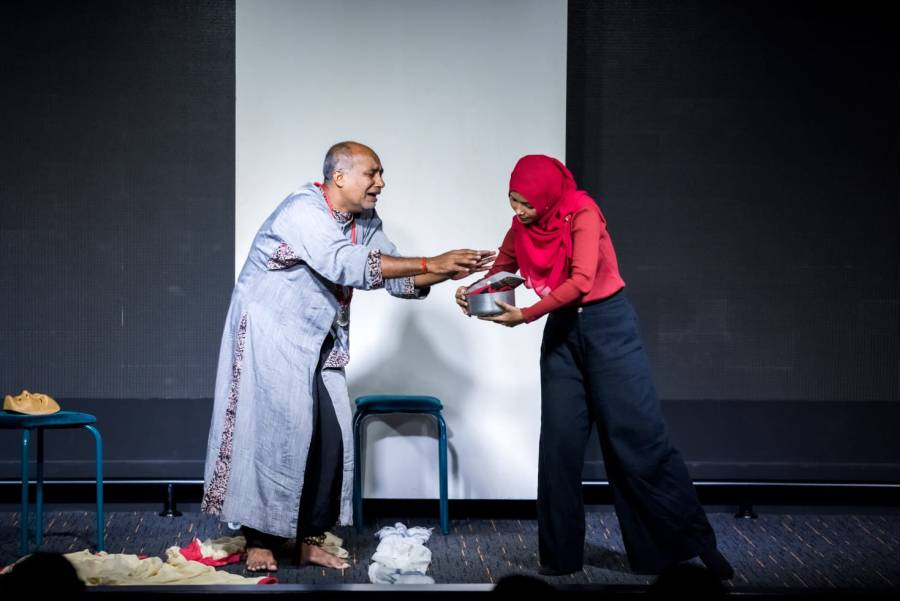
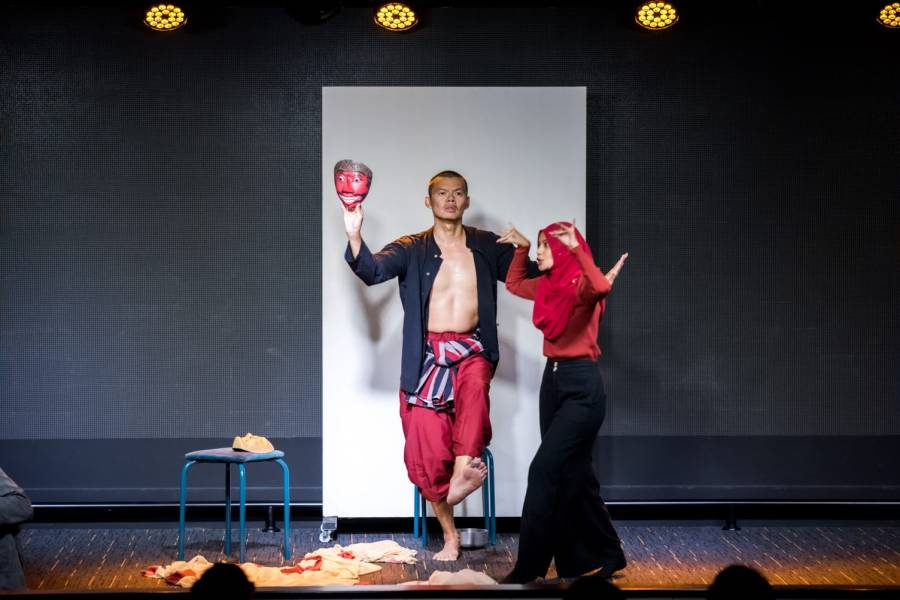
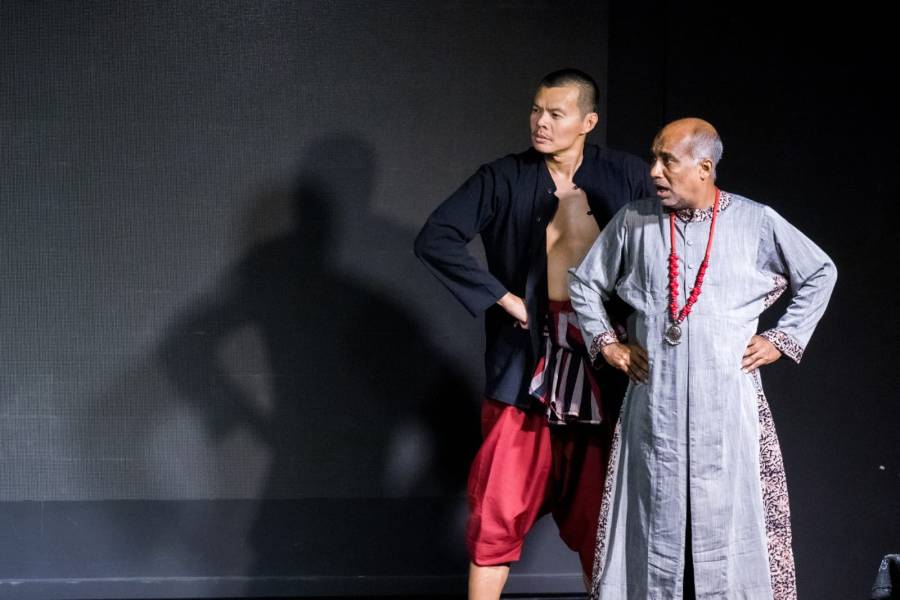
This script is the coming together of two epics – one from Siam and other which is a popular epic in a South and South East Asia. Specifically it is the coming together of Phra Aphai Mani told as an pic poem by Sunthorn Phu and a version of Ramayana by Balajan Bewoa. The script was for an intercultural performance by performers from Chulalongkorn University, Thailand and Culture Monks, India. The performance was developed and staged at Chulalongkorn University.
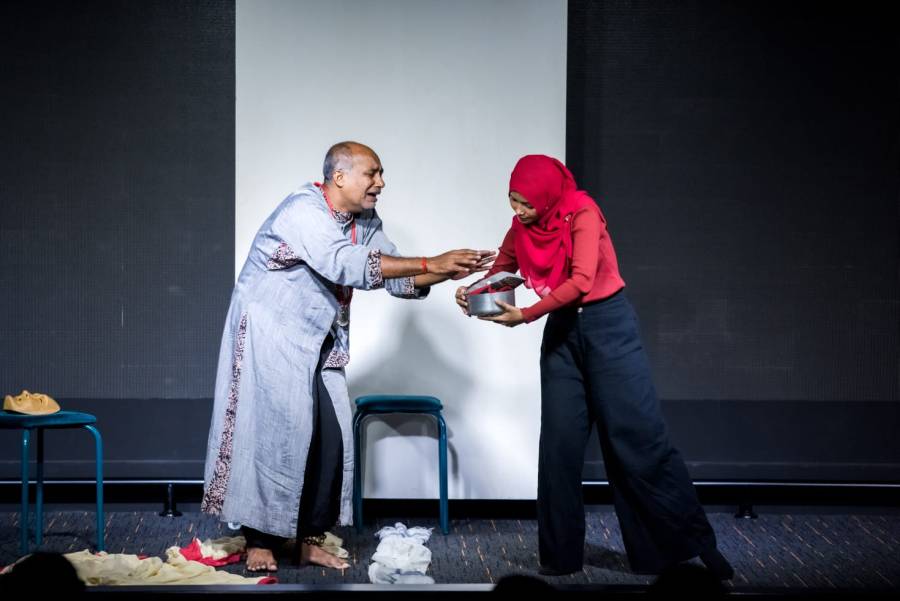
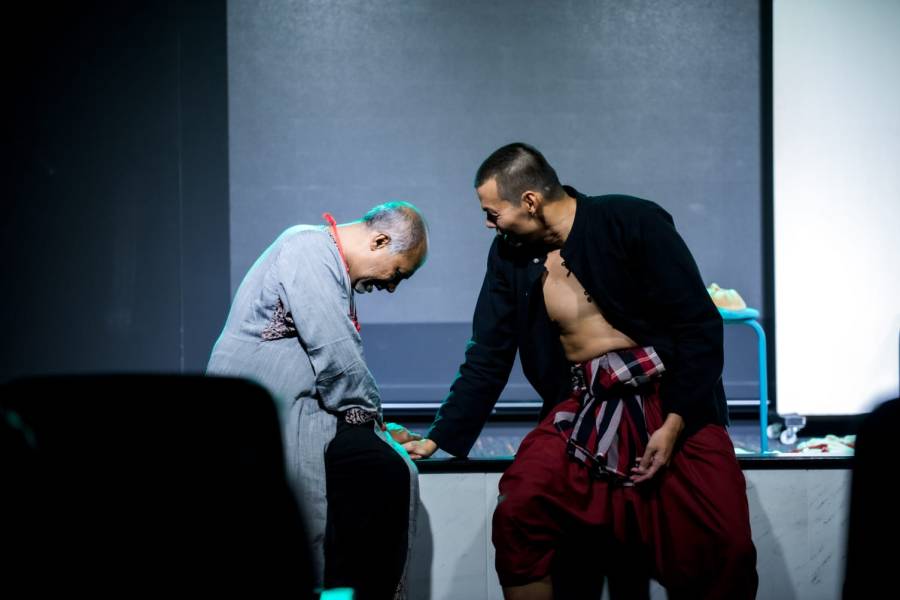
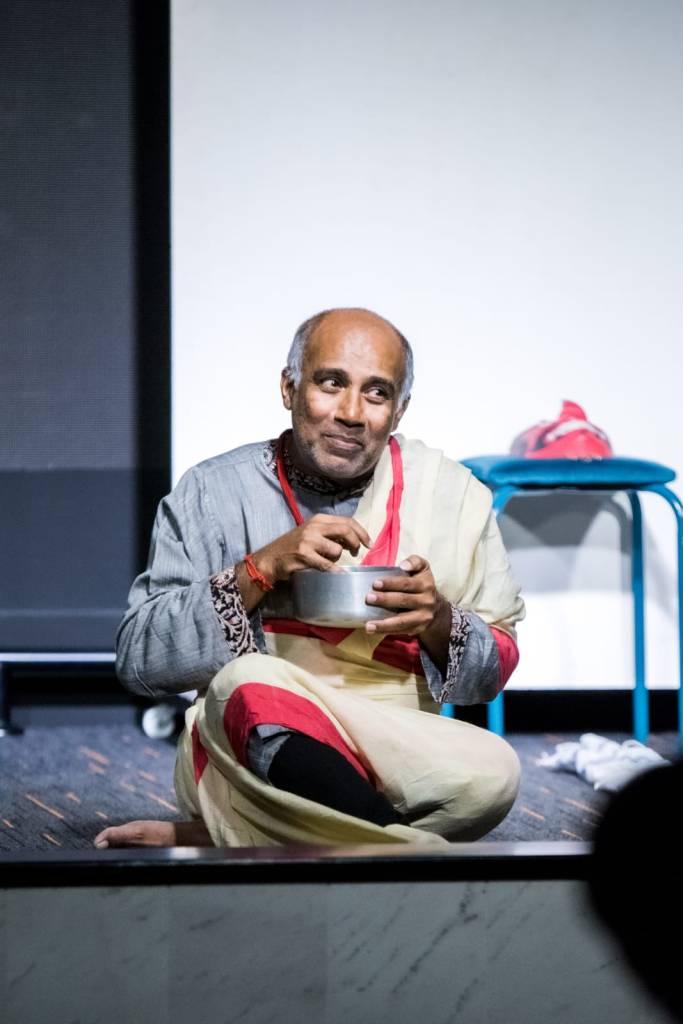
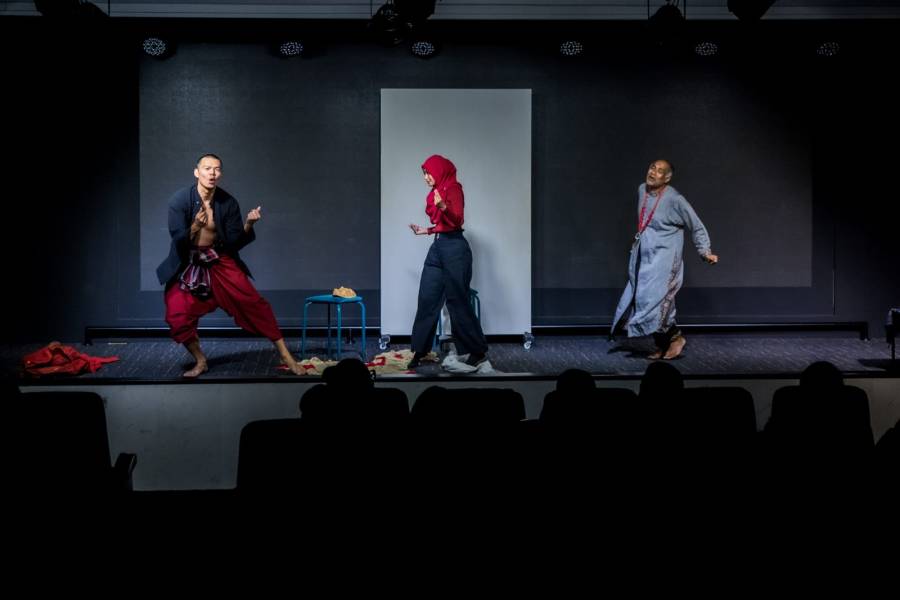
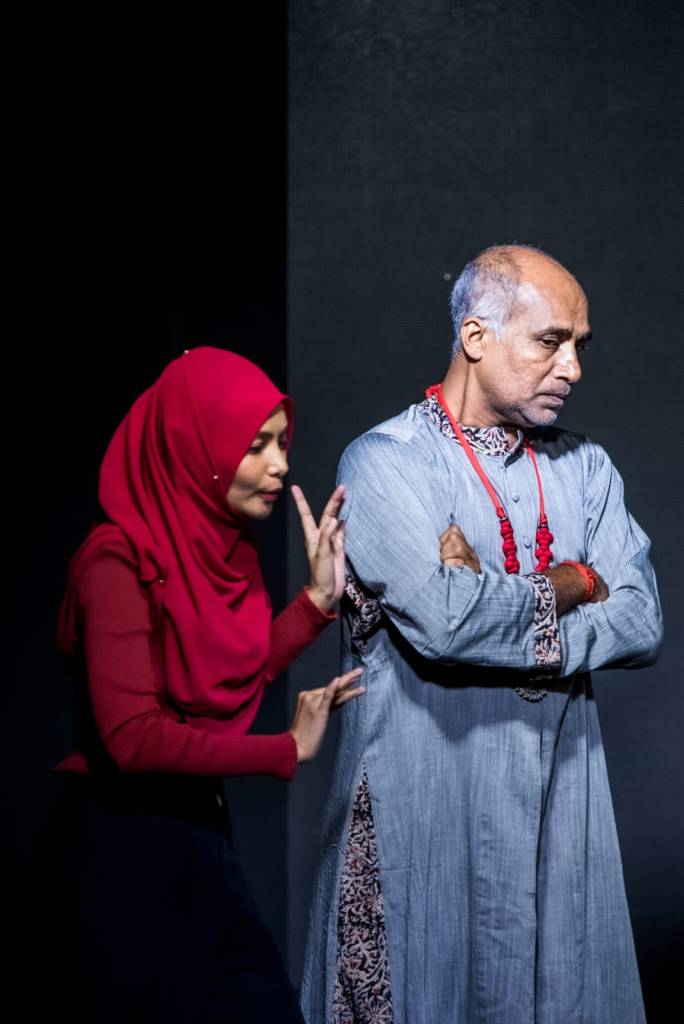
SYNOPSIS
Ramayana is a living history, ever mysterious, embellishing our native pride with its endless narrations. I have encountered many versions and have cherished the plurality of a true epic. The journey that began with the classical Valmiki’s lyrical composition moving into the labyrinth of the popular poetry of Tulsidas to a raw unfinished folk tale of Balajan Bewoa has intrigued me to revisit the phenomena again and again.
We wish to work majorly on a few interesting episodes of Ramayana extricated from the various versions of Ramayana to reflect on contemporary time, life, politics and heteronormative codes of our society. Balajan Bewoa’s story on Ramayana collected from a village in Murshidabad District, WB is an interesting transposition of the epic into a regular mundane happening.
The story has a resemblance with the approach found in the Jain Ramayana and the Adbhuta Ramayana, wherein we find Sita to be Ravana’s daughter.
Apart from Ramayana, we have other interventions to enjoy the epic phenomena. The interpolation of the Thai epic poem, Phra Aphai Mani, in the text creates a new refrain celebrating the ancient myth Ramayana, juxtaposed by an anti-colonist work. Thailand also has its own version of Ramayana named Ramakien, the hero Phra Narai is an incarnation of Vishnu like Rama. The prince Phra Aphai Mani is also empowered by Vishnu. We are trying to locate the cross-cultural resonances all-over.
The performance is a retelling of Balajan Bewoa’s Ramayana Text.
Two Epics
Silent movement of Balajan entering the space. Establishing her life and work.
I am 67 years old. I am darkskinned, frail and not too tall. I am a Muslim charwoman. My husband German Seikh was a storyteller. I learnt the art of telling from him. Now I live alone at the fringe of my village. My sons abandoned me. I work as a maid to earn my living. After work, I tell stories to the women and girls of my village. I love eating rice and shaak. When I am
free in the evening, I tell stories. I am a popular in my village…. shhhh…
Now, quiten your mind…. And concentrate, focus your ears and see the story manifesting itself….
[Bengali Text]
Ghumparani masi pisi ghumer bari jego
Bata bhore pan debo, gal bhore kheyo.
Shan bandhano ghat debo, besom mekhe neyo,
Shitalpati pere debo, pore ghum jeyo.
Thore Thore shabda debo, mone kore nio
Sundori ek bandi debo, Golpo shune jeo
Ravana was the king. His death was fated to be on his son-in-law’s hands. No daughter, no son-in-law. If a daughter is born, she would be killed. No daughter, no death due to his son-in-law. However, after a few years he had a daughter.
“Oh! Is a daughter born? Then, go swiftly, put her in a pot and drown her in the river”
The midwife took the girl in the pot and floated it down the river.
Ha ha ha ….
After a few days, another man from another place was ploughing the land.
He found the pot and the girl. He took her home and made her a girl of education like you. One day, while sweeping the floor, she picked up the Ramdhanuk and swept below it. Her father saw it and announced her marriage with the one who would be able to pick up the Shiva’s bow. It was announced all over.
Now, this so happened, that Rama Lakshmana had their mother. But, their father married another pretty lady. Bharata’s mother. Bharata’s mother was
the younger wife, the Choto Bou. She had pain in her toe nails. She was wailing. Then…
[Bengali Text]
Boro Bou go Choto Bou go jolke jabi go
Joler modhye phul phuteche dekhte pabi go.
Boro Bou go Choto Bou go arek katha shunse
Choto Bouer ghare dhukeche mukut pora minse.
So, Bharat’s mother said: you have to send those two brothers to the forest.
If they go to the forest then alone will I be relieved of the pain. Then let it be
so. So, Rama Lakshmana are thrown out of the house.
“Rama, Lakshmana, open everything, even leave the thread around your waist here.”
What to do? They had to listen to their step mother. They cut the thread worn around their waist and walked naked to the Babla tree. And said:
Then they wore the bark of the Babla tree to hide their shame like Adam and Eve and walked towards the forest.
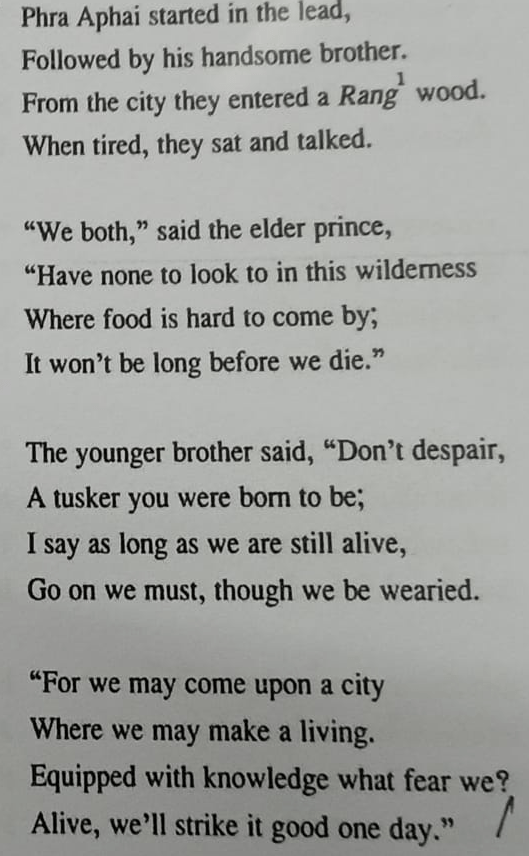
They took shelter in the Panchabati forest. There came her aunt. Her name was Surpanakha.
Surpanakha was that girl’s aunt, the girl who got married to the brothers. She was Ravana’s sister. So her aunt was she. Surpanakhasaw the girl and tried to allure her men.
Soorpanakha is a woman who dares to make advances towards a man. She unabashedly expresses first her attraction for Rama and then for
Lakshmana, trying to woo the latter for which she is horribly and brutallypunished. Lakshmana slays her nose.
However, Soorpanakha does not cringe and hide in shame. She does not wallow in self-pity neither does she magnify her physical pain; nor does she decide to end the story by ending her life. She plans an action-oriented approach to teach a lesson to the perpetrator of what is unmistakably a crime, which is obviously presented as otherwise. Perhaps that is why she is a rakshasini
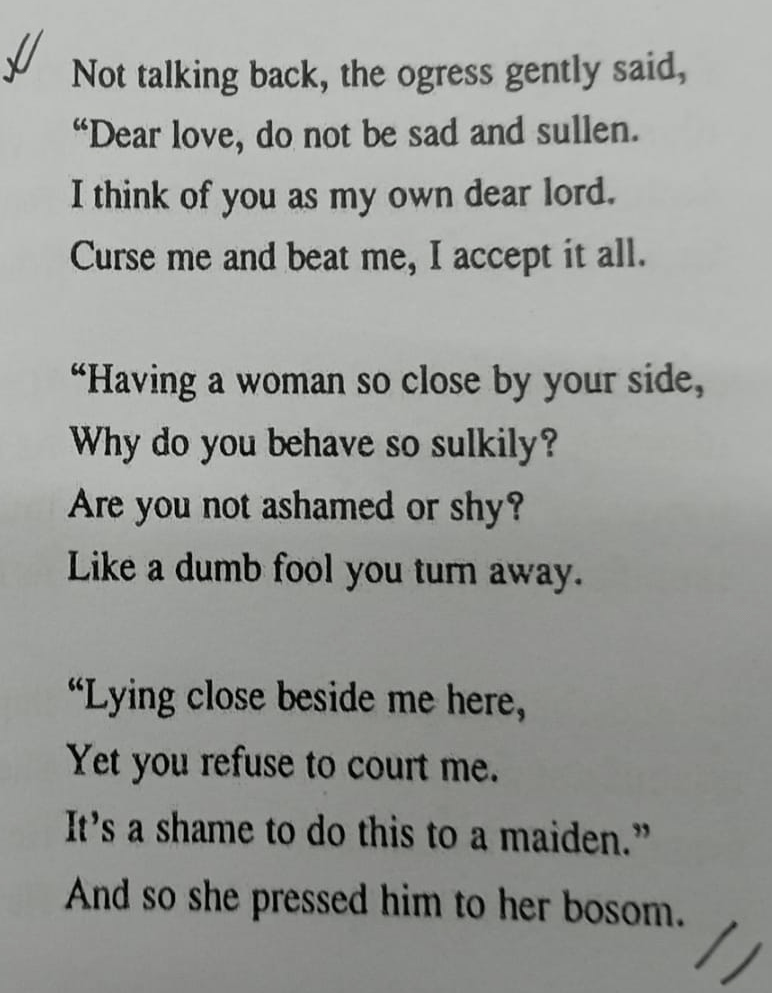
The question is why is Surpanakha’s sexual proposal or agency criticised, while Menaka and Shanta’s is not… Shanta, Rama’s own elder sister seduces Rishi Rishyashringa and unites with him to make him perfume the Yajna, which begets rain for the kingdom. It is invisible and a barely mentioned tale. Why? We shall answer these questions later. …
Now Surpanakha….
She goes back in pain to Ravana’s court and tells him.
Ravana do you know a thing
What?
There, at the edges of the forest is a pretty woman.
How do I get her then?
The men go to hunt in the forest of Panchavati. I shall be a deer. And I shall fly in front of them and they shall chase me. And I shall go deeper into the
forest. That is when you should go and take her away.
Then she flew like a deer and Rama and Lakshmana chased her. Then that girl’s own dad disguised like a beggar asks for alms. Called her : Ma help me.
Looks at her opulent breasts and asks:
Ma, what are those two on your chest?
Those are food bags for the children.
Then he said nothing and asked for food.
We have nothing much. A few fruits we can give… or else we shall be great sinners. Here take these.
No I shall not take them across the line of fire.
But, I am sorry, my husband has told me not to cross the fire. I shall give it from this side itself.
Cross the fire and give me. Or I shall not take and you shall be a sinner.
And the moment she crosses the fire her father grabs her hand and takes her away. The girls returns home as a woman trapped in the mesh of desire… Father and daughter and Agamemnon and Electra
[Bengali Text]
Jai Hanuman Gyan Guna Sagar
Jay Kapisa tuhi Loka Ujagar
Ramdut Achalita Baladhama
Anjani Putra Pavana Suta Nama
Mahavira Vikram Vajarangi
Kumati Nivara Sumati Ke Sangi
Kanchana Barana Biraja Subesha
Kanana Kundala Kunchita Kesha
Hat Vajra Au Dhwaja Birajai
Kandhe Munj Janeu Saje
Jaya Jaya Jaya Hanuman Gossain
Kripa Karahu GuruDeva KI Naai.
Ta ta ta ta Tai tai
Hanuman is thinking of ways to get Sita back. He tells. “Put jute around my tail and add kerosine and light it bright. Ravana’s Death-Arrow is in his house. We have to get it. So he disguises like Bahuroopis, the cosplay performer. He becomes… ‘Jay Ma Kali’
Kali dance.
He gets the Death Arrow. The family thought it was safe with the cosplay performer. Hanuman took the arrow and gave it Rama. Then he was hungry
and had Mangoes and threw them at different places in Bengal and so we have our mango trees. Rama got ready for the war…
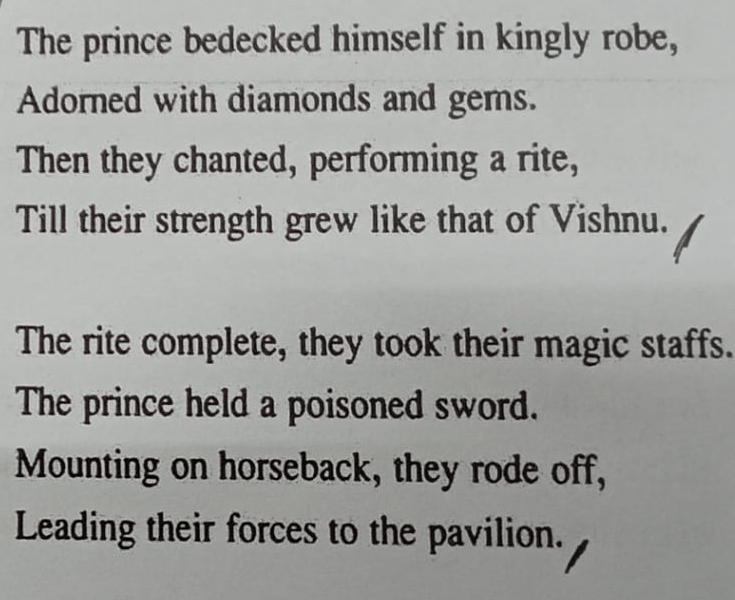
With the Death-Arrow Rama confronted Ravana.
Ravana got Mirrors to fight the war. Rama initially, thought the mirror images to be Ravana and every time missed the real one.
Play with the mirror.
Where am I? Who am I?
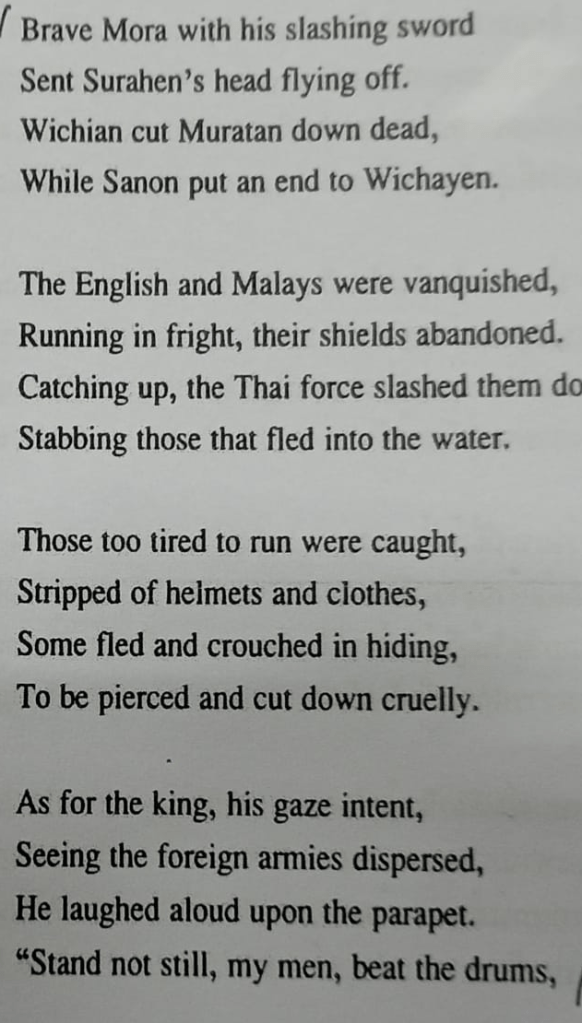
Then Rama finally, used the Death-Arrow and Ravana died. Death by his own Son-in-law. Ravana threw his daughter away yet she came back as
death incarnate…
Ravana must have said:
“I am the victim of some harsh divinity; what other explanation can there be”.
Script by Janardan Ghosh with inputs from Sudipto Dawn
Related Posts
ILOGY praxis presents Monsoon Perspective Online Lab
Monsoon Perspective Online Lab is a thematic edition of iLOGY praxis, an embodied storytelling and performance practice that explores the…
Open call for iLOGY quantum story telling & performance retreat in East Sikkim
Welcome to the iLOGY quantum storytelling & performance rural residency workshop at Shantiniketan, India from December 26 – 31, 2025.


