“The Spring Sessions
Spring evokes a sense of renewal, of the welcoming the new in our lives. In several cultures and regions around the world it is virtually the beginning of the new year. Universally the spring festivals and rituals are about playfulness, the sensual and the erotic. The ākāśa story performance workshop is based on the rich knowledge of aesthetics in India through the Upanishads, Natyashastra, Tantraloka and the Bhakti movement. Spring holds a very important place in Indian theology and folklore since the ancient times as it does in almost all cultures. However the meaning of Spring and its performance through rituals and celebrations have changed significantly and we hope to reflect upon this in this workshop. The metaphorical Spring which means renewal is also an essential part of our well being and indeed of that of the the ecology. How is that affected and how can we restore this ability? We hope to we will come together to address this question as well!
The workshop will be held over 3 lives sessions of spread over 3 weeks. The available batches are mentioned below
About ākāśa story performance workshop
“The inner, what is it, if not the intensified sky ?” – Rainer Maria Rilk
ākāśa workshop: A voyage beyond storytelling conducted by Janardan Ghosh & Sudipto Dawn
Unearth the creator & teller/performer of stories in yourself through a practice based on the essence and teachings of Natyashastra & other practices and texts in India relating to aesthetics and performance .This workshop is open to everyone and prior experience in performance or any performing arts practice is not necessary.
Enquiry form


Upcoming Batches
Sunday Batch ( most suitable for Australia, New Zealand & Asia)
May 18, 25 & June 1, 2025 from 1:30 PM – 3 pm (Sydney time), i.e. 9 am – 11:30 pm (India time)
June 14, 21, 28, 2025 from 1:30 PM – 3 pm (Sydney time), i.e. 9 am – 11:30 pm (India time)
Saturday Batch (most suitable for India , Africa, Asia, certain time zones in Australia USA & Europe)
May 31, June 7 & 14, 2025 from 6 pm – 8:30 pm (India time) i.e – 12:30 pm – 3 pm (Universal time)
June 21, 28 & July 5, 2025 from 6 pm – 8:30 pm (India time) i.e – 12:30 pm – 3 pm (Universal time)
Saturday Batch (most suitable for Africa, Americas, Canada, Europe)
May 17, 24 & 31 , 2025 from 2 pm – 4:30 pm (Universal time) i.e 9 am – 11:30 am (New York time)
June 21, 28 & July 5 2025 from 2 pm – 4:30 pm (Universal time) i.e 9 am – 11:30 am (New York time)
Sunday Batch (most suitable for India , Africa, Asia, certain time zones in Australia USA & Europe)
June 29, July 6, 13, 2025 from 4 pm – 6:30 pm (India time) i.e 10:30 am – 1 pm (Universal time)
Monday Batch (most suitable for India , Africa, Asia, certain time zones in Australia USA & Europe)
May 12, 19,26, 2025 from 7 pm – 9:30 pm (India time) i.e 11:30 am – 2 pm (Universal time)
June 9, 16, 23, 2025 from 6 pm – 8:30 pm (India time) i.e 11:30 am – 2 pm (Universal time)
Tuesday Batch (most suitable for India , Africa, Asia, certain time zones in Australia USA & Europe)
May 13, 20, 27, 2025 from 7 pm – 9:30 pm (India time) i.e 11:30 am – 2 pm (Universal time)
June 10, 17, 24, 2025 from 6 pm – 8:30 pm (India time) i.e 11:30 am – 2 pm (Universal time)
Wednesday Batch (most suitable for India , Africa, Asia, certain time zones in Australia USA & Europe)
May 14, 21, 28, 2025 from 7 pm – 9:30 pm (India time) i.e 11:30 am – 2 pm (Universal time)
June 11, 17, 24, 2025 from 6 pm – 8:30 pm (India time) i.e 11:30 am – 2 pm (Universal time)
Thursday Batch (most suitable for India , Africa, Asia, certain time zones in Australia USA & Europe)
May 15, 22, 29, 2025 from 7 pm – 9:30 pm (India time) i.e 11:30 am – 2 pm (Universal time)
June 13, 18, 25, 2025 from 6 pm – 8:30 pm (India time) i.e 11:30 am – 2 pm (Universal time)
Friday Batch (most suitable for India , Africa, Asia, certain time zones in Australia USA & Europe)
May 16, 23, 30, 2025 from 7 pm – 9:30 pm (India time) i.e 11:30 am – 2 pm (Universal time)
June 14, 21, 29, 2025 from 6 pm – 8:30 pm (India time) i.e 11:30 am – 2 pm (Universal time)
For more info whatsapp +91 8697919308 or drop an email to sudipta@culturemonks.in
Preface:
Hollywood is the most influential storyteller in the world today. Thereafter we are usurped by the magical stories of Cinema. Therefore, we can claim that Storytelling is still a surviving traditional art. We have been successful in preserving and sustaining a part of intangible heritage and a specific trend of socio-cultural traditions pertaining to humanity across the globe- the art of storytelling. Moreover, it is impossible to survive without stories. It is an irresistible psycho-somatic urge transmitted to our body and mind through genes from our ancestors. We are consistently building stories and dissolving them in our existential matrix. News, corporate talks, gossips, lessons, messages and chats are but stories in various forms satisfying our daily art of living. Plays, cinema, dance, music and such other forms of art are dynamic versions of storytelling. We propose to go back to the basics. Learn the art of storytelling irrespective of your professions and passions.
Storytelling enables experiences to be made meaningful and is thus an important part of our miraculous being. Telling stories assists individuals to engage in sense-making about their experiences, to order events in a coherent fashion, relate events to other events and attribute causality. In short, storytelling is a key way in which memories are organized and articulated. Furthermore, as a ubiquitous, everyday practice, storytelling has other functions, especially in relation to religion, customs, faith, belief and identity: it creates and sustains communities and reproduces culture. It is essential.
The Objective:
The workshop primarily aims to provoke the participants to explore their inner world of creativity and shape a community of people who have shared visions. Secondly, it would help the takers to locate the germ of storytelling in them. The few tenets of our workshop modules:
1. The language of Dreaming
“How far our dreaming is drifting from popular consciousness? Storytellers are engaged, in trying to understand all that makes up our society’s dreaming.”
2. Feeling the story on the page
“A story on a page is like a drum in a museum display case. You can see what it looks like but until the glass is broken, the drum liberated and the skin beaten, you do not know what it sounds like – and of course the music emerging from it will be different according to the temperament and skill of the drummer. The task of contemporary revival storytellers is to free the stories from the page and return them to a fluid, transitory life on the wind.”
3. Links in chains that span centuries
“Traditional storytellers also bear witness to continuity. They are always aware of their marginality, the place of in- between, which is also the place of linking. Storytellers are humble participants in chains of communication which can span vast geographical and temporal distance.”
4. Learning to listen
“The thread which the audience follows and which the storyteller uses to bind them is a current of attentive energy. Listening to the reading of a text demands a more active attention because there is no stopping or going back. Listening to a live storyteller is different again.”
5. New resonances from old metaphors
“At the heart of the stories is the consistent affirmation of the presence and action of numinous forces – helpers and hinderers, witches, dwarfs, giants, gods and goddesses. As these stories unfold, there emerge patterns and sequences of events that are both startling and satisfying as the old language of metaphors finds resonance in the archaic subconscious of the listeners.”
6. Mapping the Inner World
“The relative rarity of resonant image-making in contemporary Indian art is striking. Is our collective dream organ malnourished or has all its energy been sold to the world of advertising where imagination is cynically used – or abused – to conceal rather than reveal the truth in order to sell lies? Probably both. It is as if, in popular consciousness, the vocabulary and grammar of the language of the soul have been forgotten. Maybe the soul itself has been forgotten. Storytelling would revive the language of the soul.”
Content of the Workshop
a. The art of Listening and types of listening
b. History and philosophy of storytelling
c. Textures of storytelling
d. The art of telling – Voice and Movement; Sound and Images.
akasa
a. The Self and the other: Reflections, activities, observations
b. The merging: Inter-texuality and referential points
c. Story and more: The craft work (videos, other art forms, and use of props)
The Performance.
For more info whatsapp +91 8697919308 or write to sudipta@culturemonks.in
About Janardan Ghosh
Janardan is a storyteller, theatre actor, scriptwriter and director, film actor. He has been involved with performing arts for over 25 years & has trained & worked with prominent international and national theatre practitioners. He holds a doctorate from RKMVERI, Belur, West Bengal.
An update: ākāśa in Greece
Delighted to announce that the ākāśa storytelling and performance is unfolding in Europe this March.
This season, Dr. Janardan Ghosh is actively engaged in Greece through multiple prestigious invitations in 2025. He has been invited by the Department of Theatre Studies, School of Arts, University of the Peloponnese , to conduct workshops, perform the Ramayana, and deliver a lecture on Nāṭyaśāstra, in Nafplio. Additionally, he will participate in the 1st Thessaloniki Storytelling Festival”, presenting a compelling narrative on the theme of “Deep Water.” Further strengthening his academic presence, Dr. Ghosh is also a key speaker at the *8th Athens International Conference on Theatre/Drama & Inclusive Education , hosted by the Hellenic Theatre/Drama & Education Network (TENet-Gr) in collaboration with UNHCR Greece. His contributions include a paper presentation titled “Education for Vulnerable Social Groups Using Intercultural Theatre and Ākāśa Practices” and a workshop on “Embodied Storytelling: Exploring ākāśa for Empowering Vulnerable Social Groups. ” These engagements strengthen ākāśa & Dr. Ghosh’s competence and virtuosity in performance, storytelling, and its intersection with spirituality, healing, inclusion, and education on an international stage.
ākāśa related performances & news
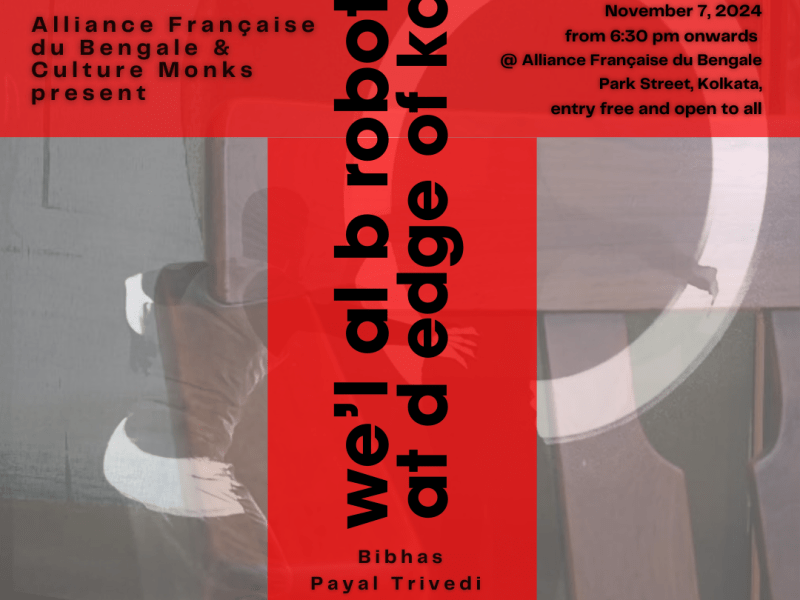
We’l al b robots at d edge of kali
After the Singularity, We’ll All Be Robots Theatre Adda : Park Street sessions presents an experimental performance called “We’l al b robots at d edge of kali” on November 7, from 6:30 pm at…
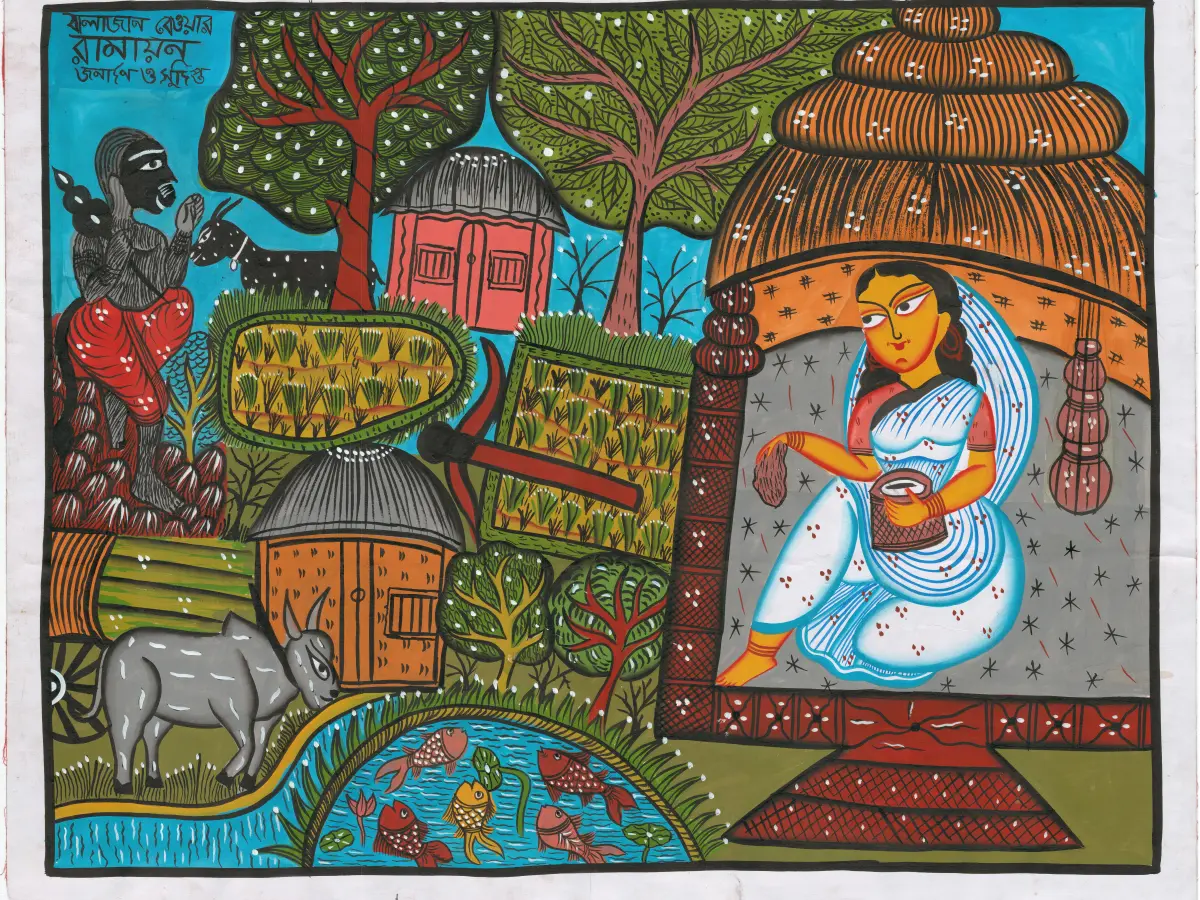
Balajan Beowa’s Ramayana
“How many Ramayanas? Three hundred? Three thousand? Here is one” – A. K. Ramanujan The epic, Ramayana, is a collective heritage of South & South East Asia. This epic exists as religious and…
Exploring the Poetics of Space with “an unofficial and contentious epic called NOW”
Theatre Adda : Park Street sessions presents an experimental performance called ” an unofficial and contentious epic called NOW” which is loosely connected to an official ancient epic.

Theatre Adda presents 25 encounters with a stranger
Theatre Adda : Park Street sessions presents a session of experimental performance titled “25 encounters with a stranger”.
digambarim : the body alone with francesca fini
The Italian Embassy Cultural Center, New Delhi, Francesca Fini & Culture Monks, in association with Littlei & Cube Culture, present Digambarim : The Body Alone. Digambarim : The Body Alone, with Francesca Fini is…
Balajan Beowa’s Ramayana
“How many Ramayanas? Three hundred? Three thousand? Here is one”…
Keep readingParticipants speak


“Was great, and really mind triggering :)” – Michaela Broeckx
“Great. Thanks a ton. Your work is wonderful and you conducted it very well. Thanks a ton. There is a higher power doing all this” – Vanitha Muthukumar
” Earlier this month I had participated in another workshop of Story Telling organised by Cultural Monks. It was a wonderful experience, learnt a lot. Thank u culture Monks. You are doing a great work for the community”. – Lipika
“Wanted to thank you with all my heart. It was indeed one of its kind cathartic experience for me”. – participant from Kathakoli storytelling workshop
― Alakanda Chatterjee
So these are my biggest takeaways from the workshop.
Personal Learnings:
1.) The importance of warmup before any performance. This can be applied to any area in life. Eg: Everyday is a performance for me personally , so I do 15 mins of breathing based guided meditation daily; first thing in the morning before I start the day. This practice was reinforced & validated through the lessons during the workshop as I clearly felt more relaxed and “in the flow” after performing them.
2.) Through the critiquing session feedback, it was very clear that I had a lot of work to do on my editing skills while structuring any narrative. As I mentioned in the workshop, I have been repeatedly told this before, by many of my mentors, friends & colleagues. I’ve made improvements in this domain from the past but obviously I’m still a work in progress!! This workshop was an important reminder to spend more time on my editing chops!!
3.) ( This one is completely my personal viewpoint ) The most important story that you’ll tell is your OWN. The more comfortable we get owning up our OWN LIFE STORY, with all it’s imperfections, blemishes & vulnerabilities; the more we can connect authentically with others. We as humans, crave connection over concepts. We prefer the Raw & Real over Polished & Processed. We embrace simplicity over sophistication. In fact as someone famous said, ” Simplicity is the ultimate sophistication.”
I put this to practice intentionally through my tasks at the workshop. Did the authenticity resonate with you folks? That part can only be answered by you! Let me know.
I would love to hear from the other participants about their personal experiences. And from the mentors / masters as well. Thank You.
Sudhasheel Sen ( Creative Director ) , Cogfree Advertising
More about ākāśa (Katha’koli) Storytelling
That stories must have emotions, plots, structures, voice and conflicts – are possibly known to many. ākāśa (Katha’koli) storytelling ways, are about not only creating the ruptures ‘within’ to emerge with stories, but in the ways to make the stories resonate with the audience – to etch this intercourse as memorable, disruptive and emotional.
ākāśa (Katha’koli) storytelling workshops aims at creating a community of storytellers for whom storytelling is a means of personal and social transformation. Using methods from theater, music & movement based exercises, the workshop helps the participants to dig deep within themselves and emerge with stories which lead to a process of personal transformation and realization of their potential as agents of social change.
You will also be able to access important and relevant resources which will help you constantly develop as a storyteller.
Although storytelling helps greatly in the business and social world, and this workshop and the more advanced forms of it which will follow , also has insights from the business world – people, who are trainers, corporate storytellers also will make guest appearance, yet, the ākāśa katha’koli platform goes beyond this – it’s about making life more meaningful immediately and constantly transform it towards the one you would like to lead.
The workshop primarily aims to provoke the participants to explore their inner world of creativity and shape a community of people who have shared visions. Secondly, it would help the takers to locate the germ of storytelling in them. The few tenets of our workshop modules: 1. The language of Dreaming “How far our dreaming is drifting from popular consciousness? Storytellers are engaged, in trying to understand all that makes up our society’s dreaming.”2. Feeling the story on the page “A story on a page is like a drum in a museum display case. You can see what it looks like but until the glass is broken, the drum liberated and the skin beaten, you do not know what it sounds like – and of course the music emerging from it will be different according to the temperament and skill of the drummer. The task of contemporary revival storytellers is to free the stories from the page and return them to a fluid, transitory life on the wind.” 3. Links in chains that span centuries “Traditional storytellers also bear witness to continuity. They are always aware of their marginality, the place of in- between, which is also the place of linking. Storytellers are humble participants in chains of communication which can span vast geographical and temporal distance.” 4. Learning to listen “The thread which the audience follows and which the storyteller uses to bind them is a current of attentive energy. Listening to the reading of a text demands a more active attention because there is no stopping or going back. Listening to a live storyteller is different again.” 5. New resonances from old metaphors “At the heart of the stories is the consistent affirmation of the presence and action of numinous forces – helpers and hinderers, witches, dwarfs, giants, gods and goddesses. As these stories unfold, there emerge patterns and sequences of events that are both startling and satisfying as the old language of metaphors finds resonance in the archaic subconscious of the listeners.” 6. Mapping the Inner World“The relative rarity of resonant image-making in contemporary Indian art is striking. Is our collective dream organ malnourished or has all its energy been sold to the world of advertising where imagination is cynically used – or abused – to conceal rather than reveal the truth in order to sell lies? Probably both. It is as if, in popular consciousness, the vocabulary and grammar of the language of the soul have been forgotten. Maybe the soul itself has been forgotten. Storytelling would revive the language of the soul.”
Related Content
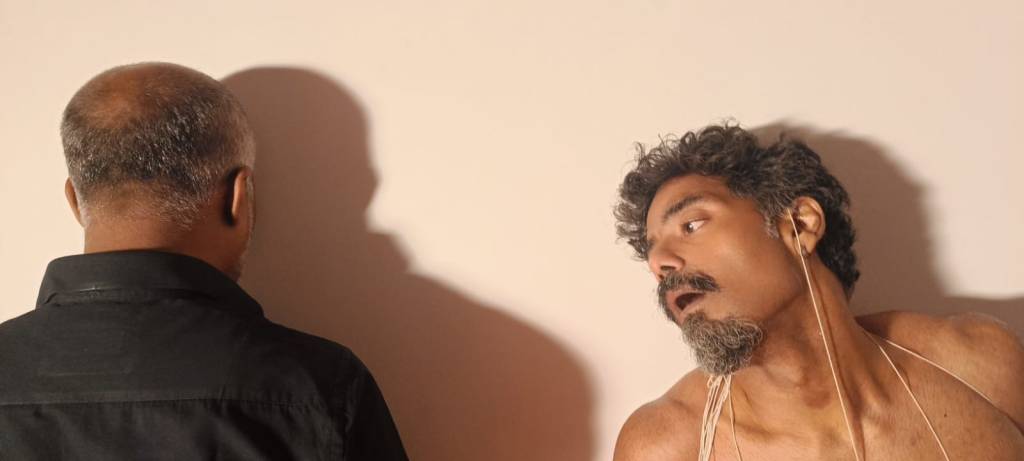
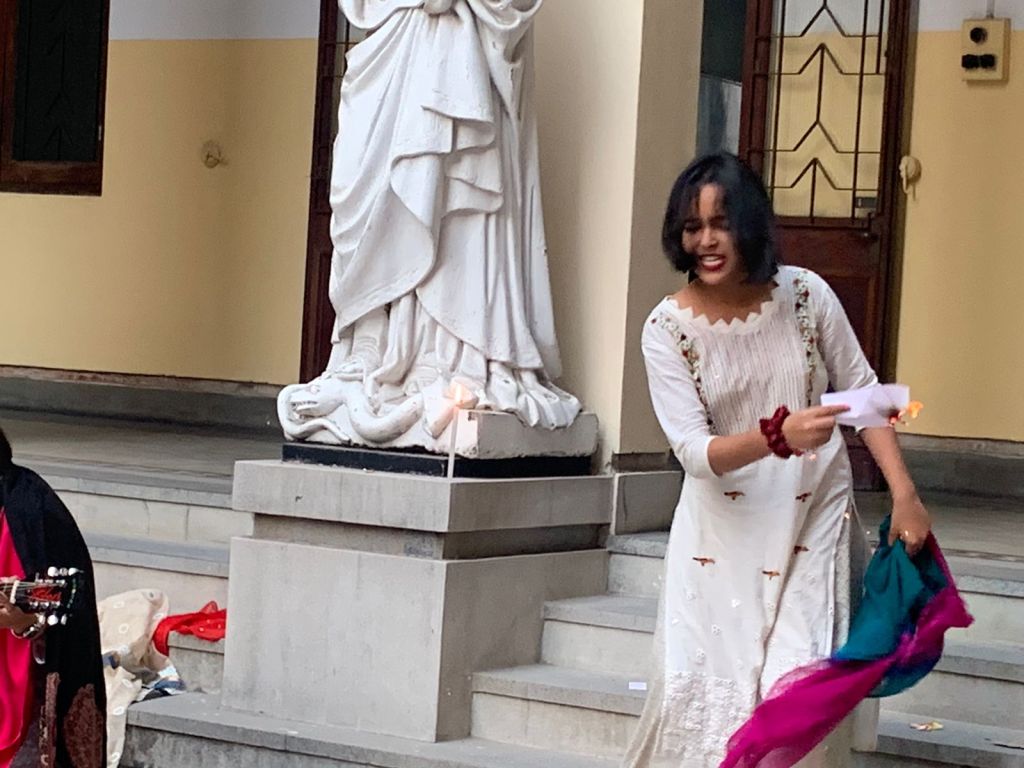
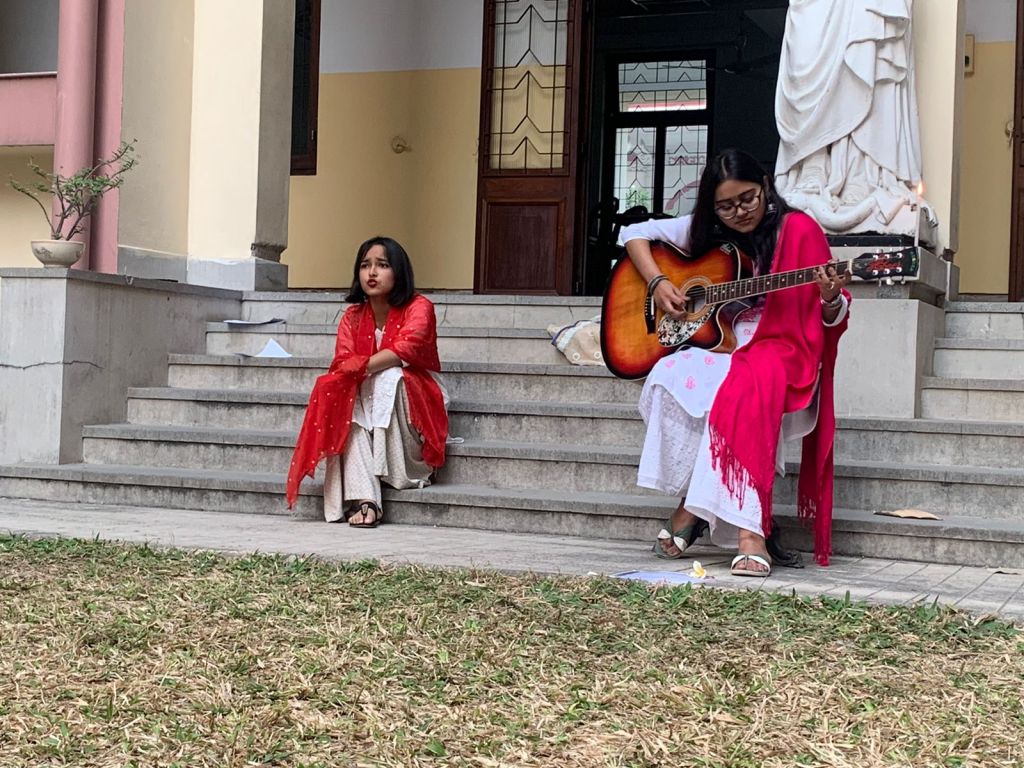
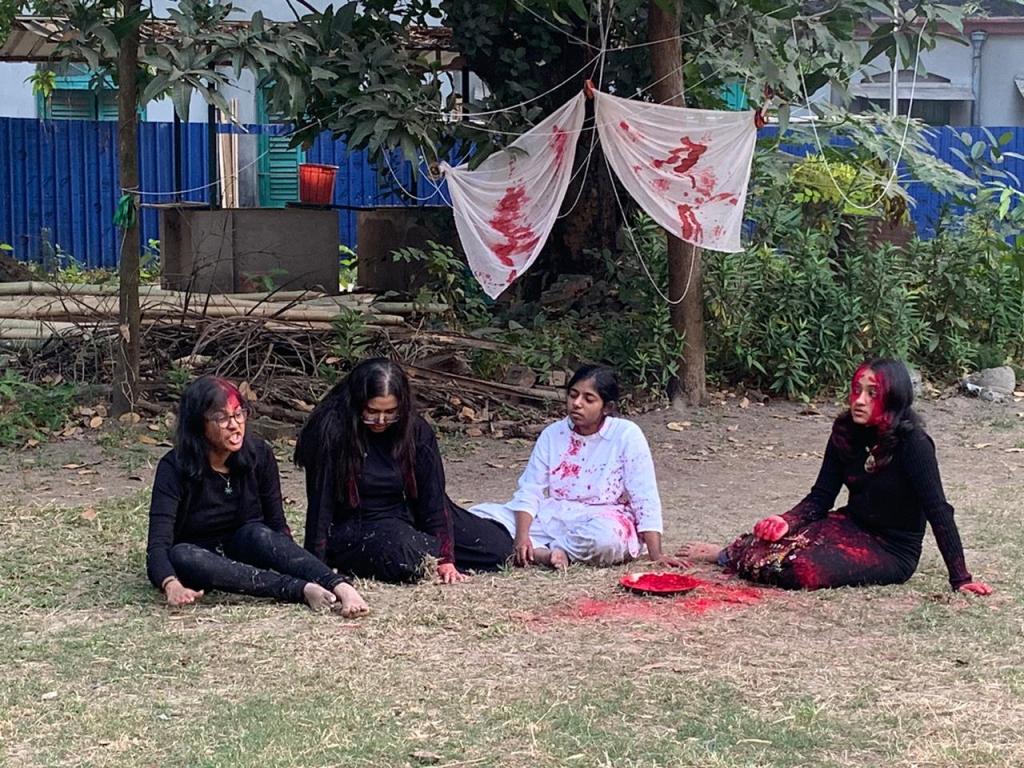
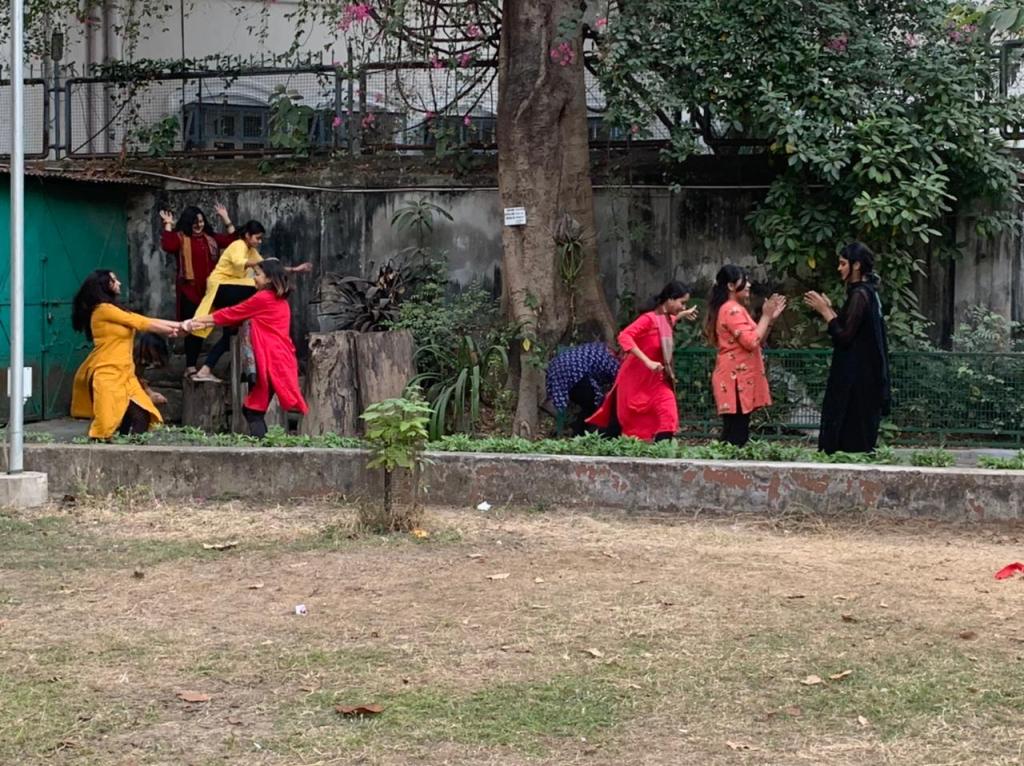
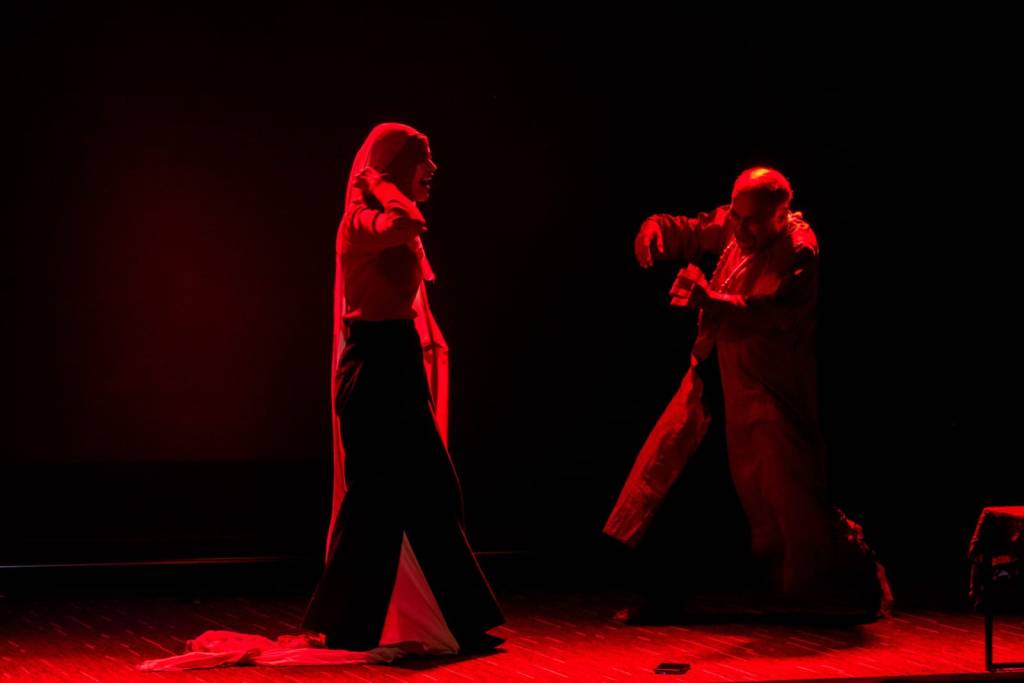
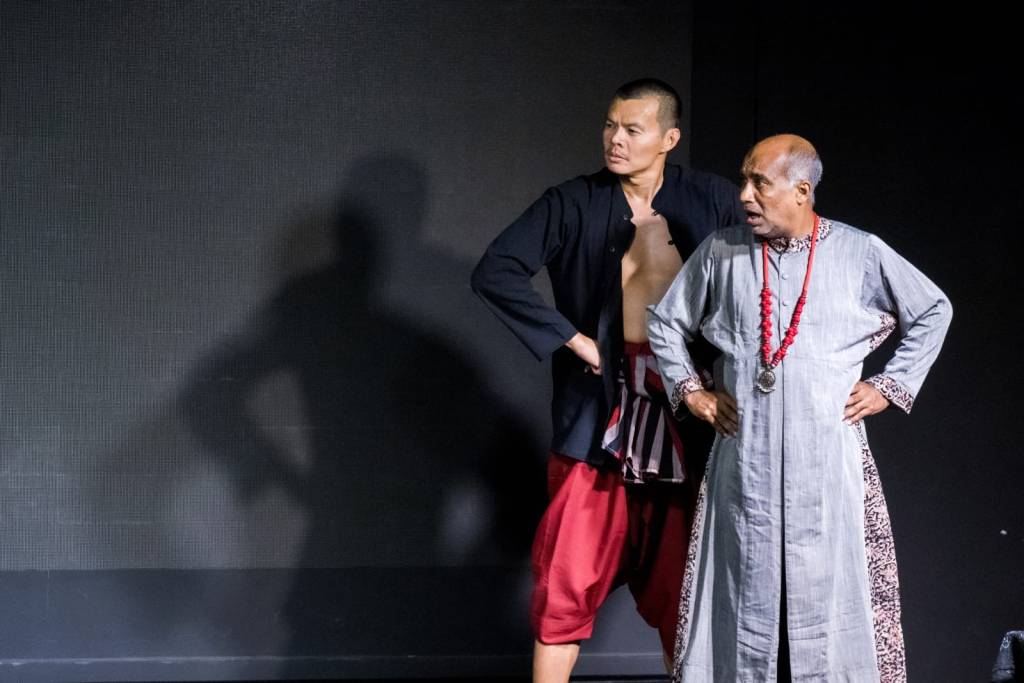
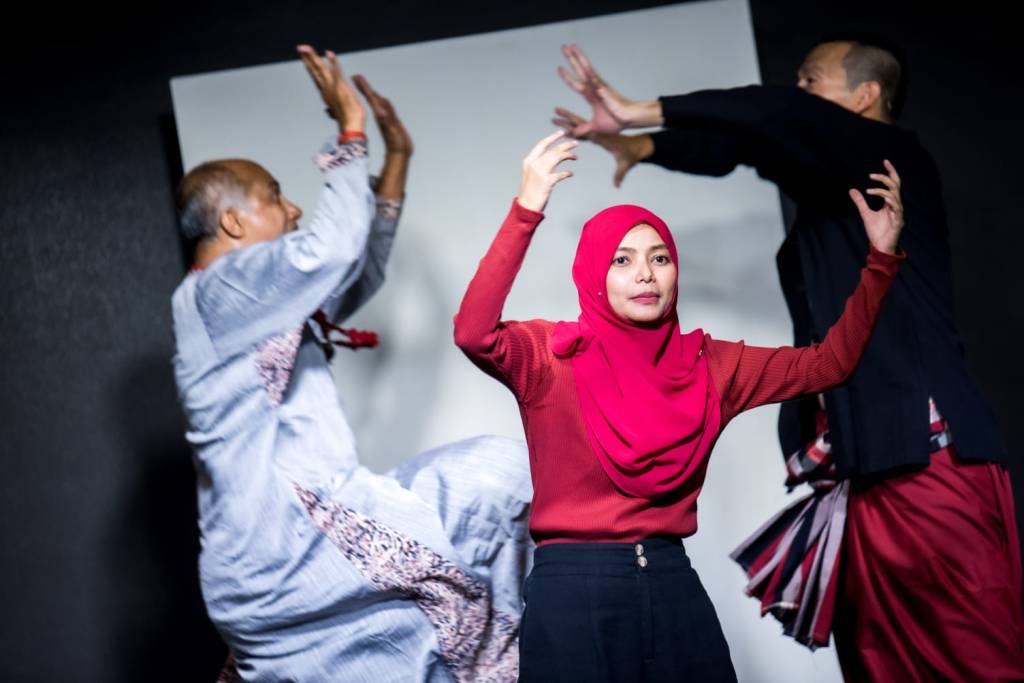
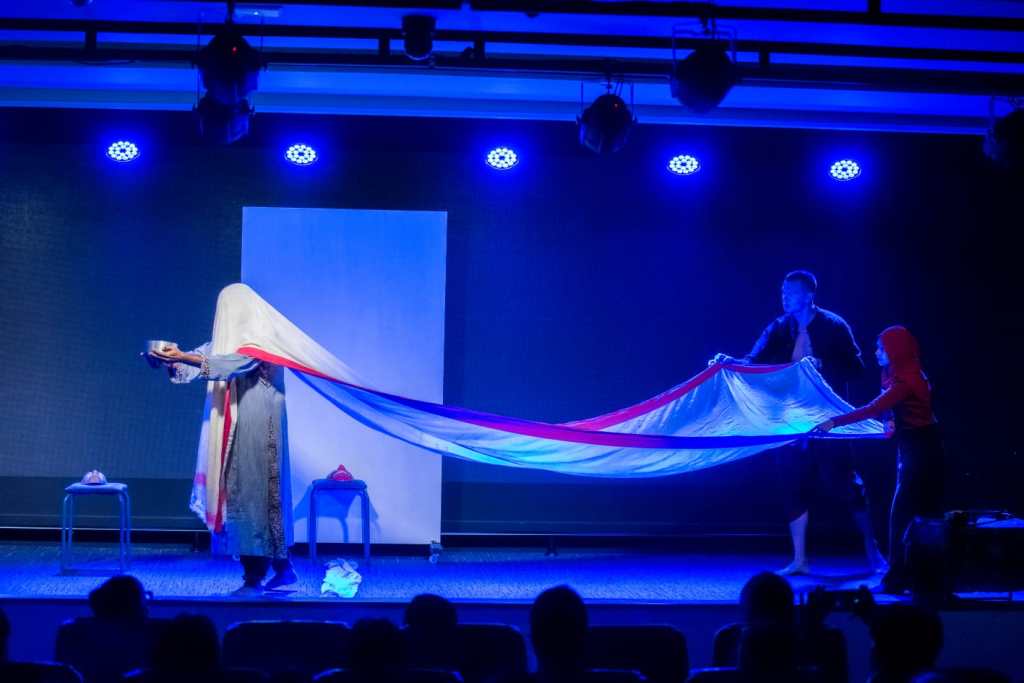
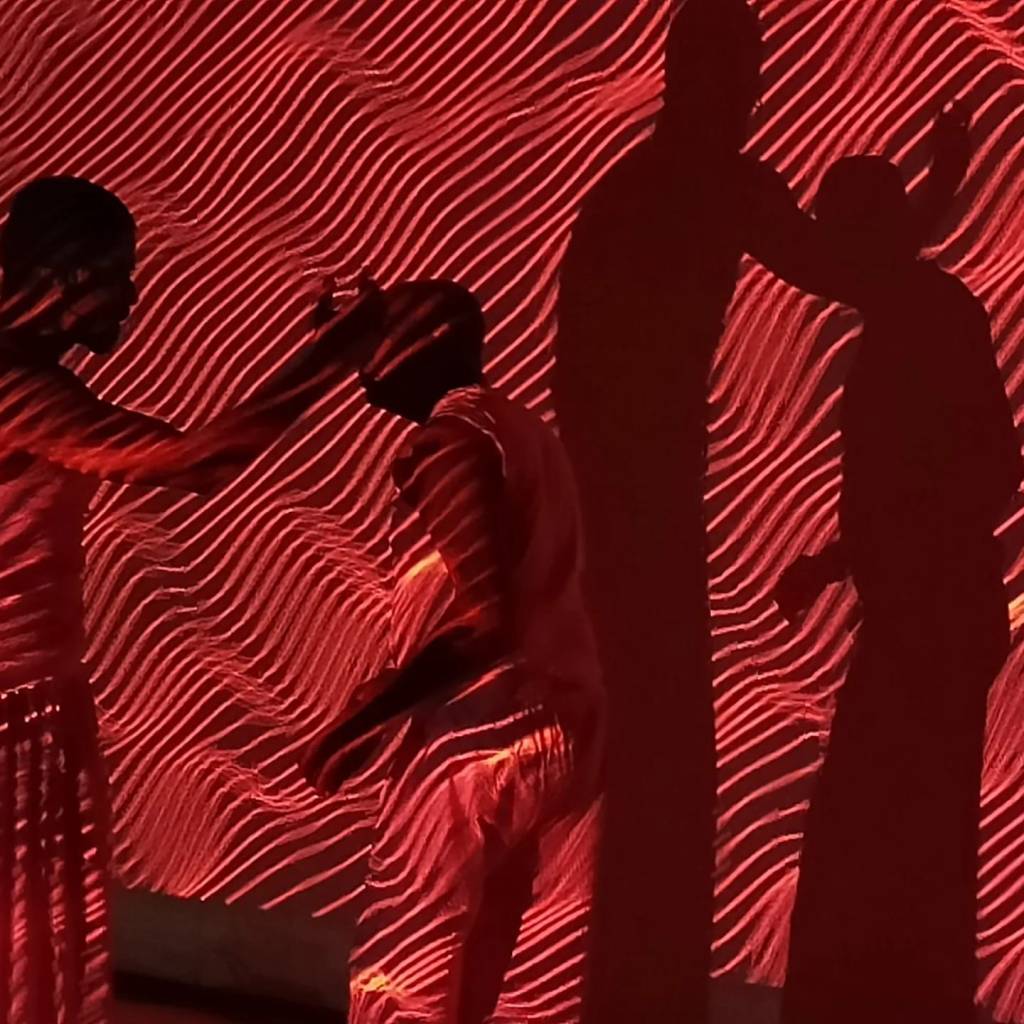
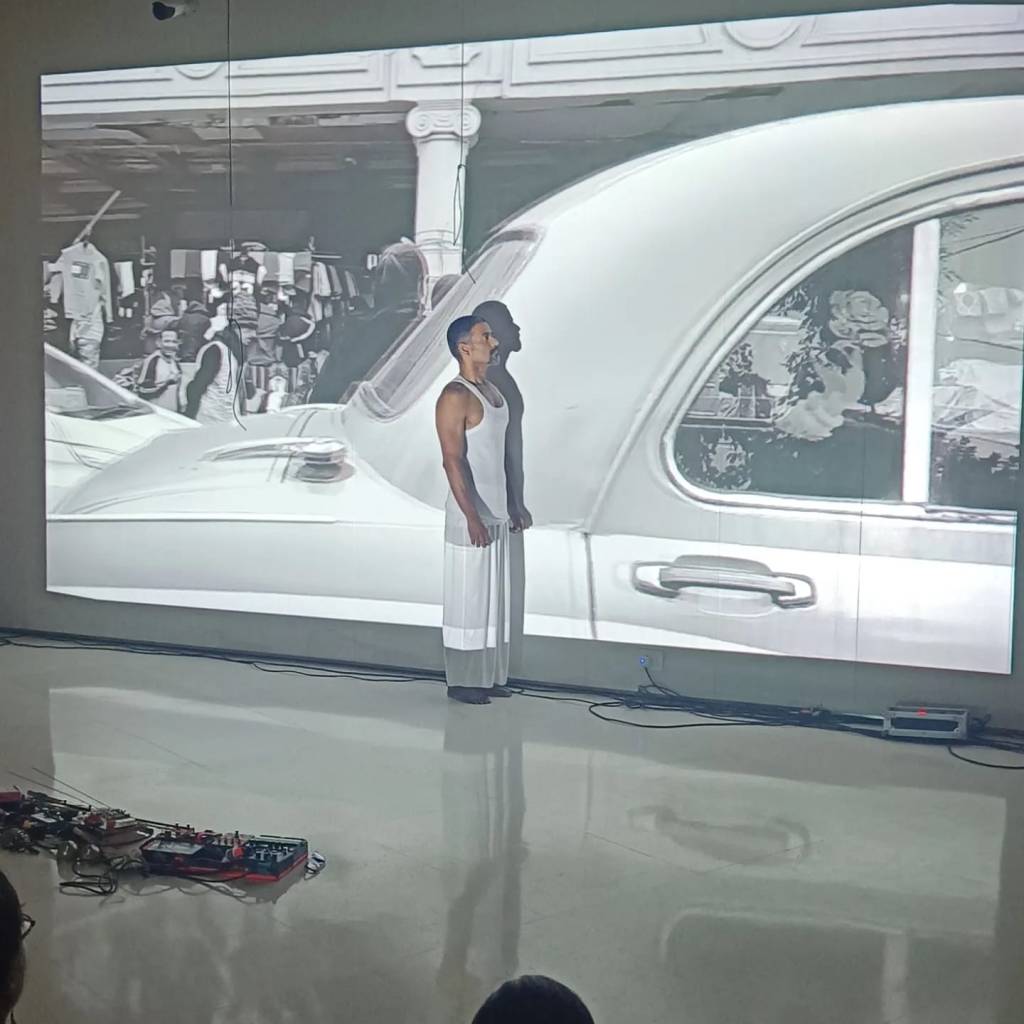
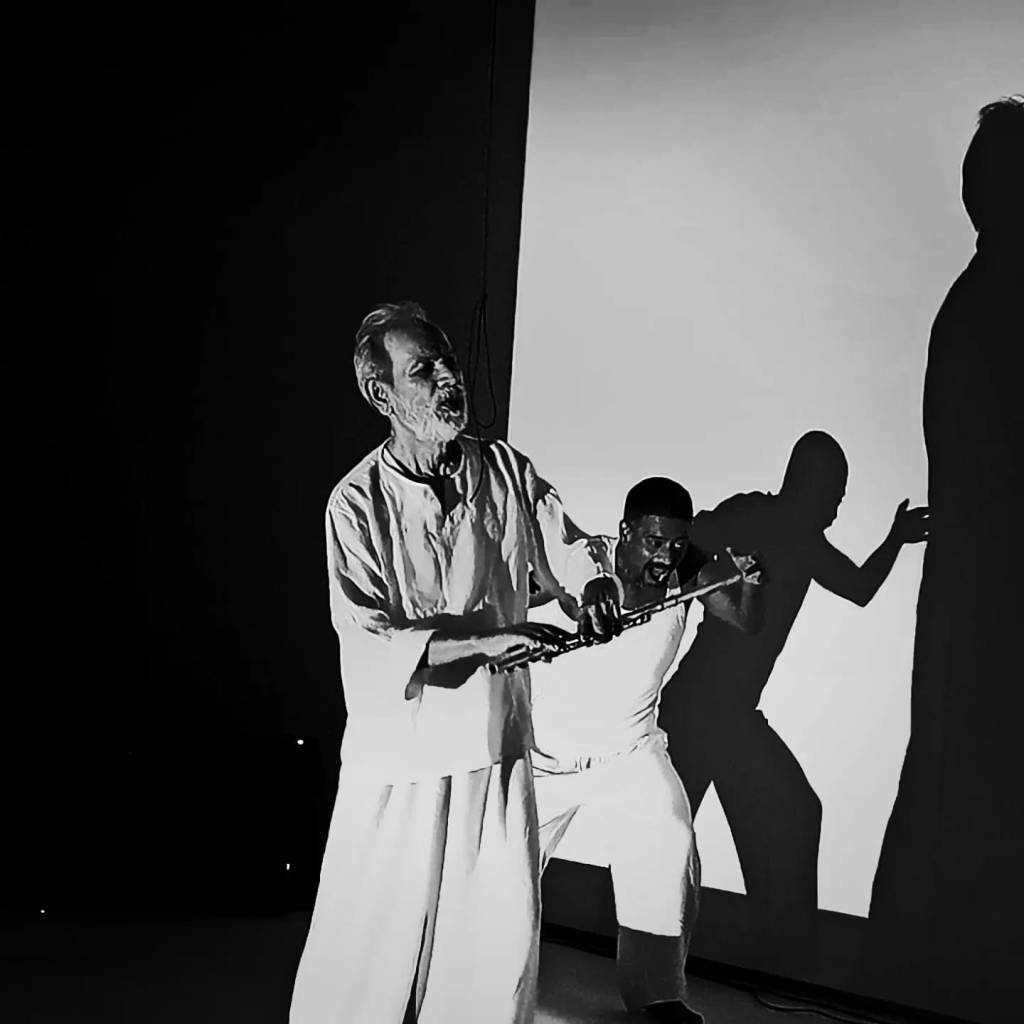
Images from past ākāśa workshops & performances



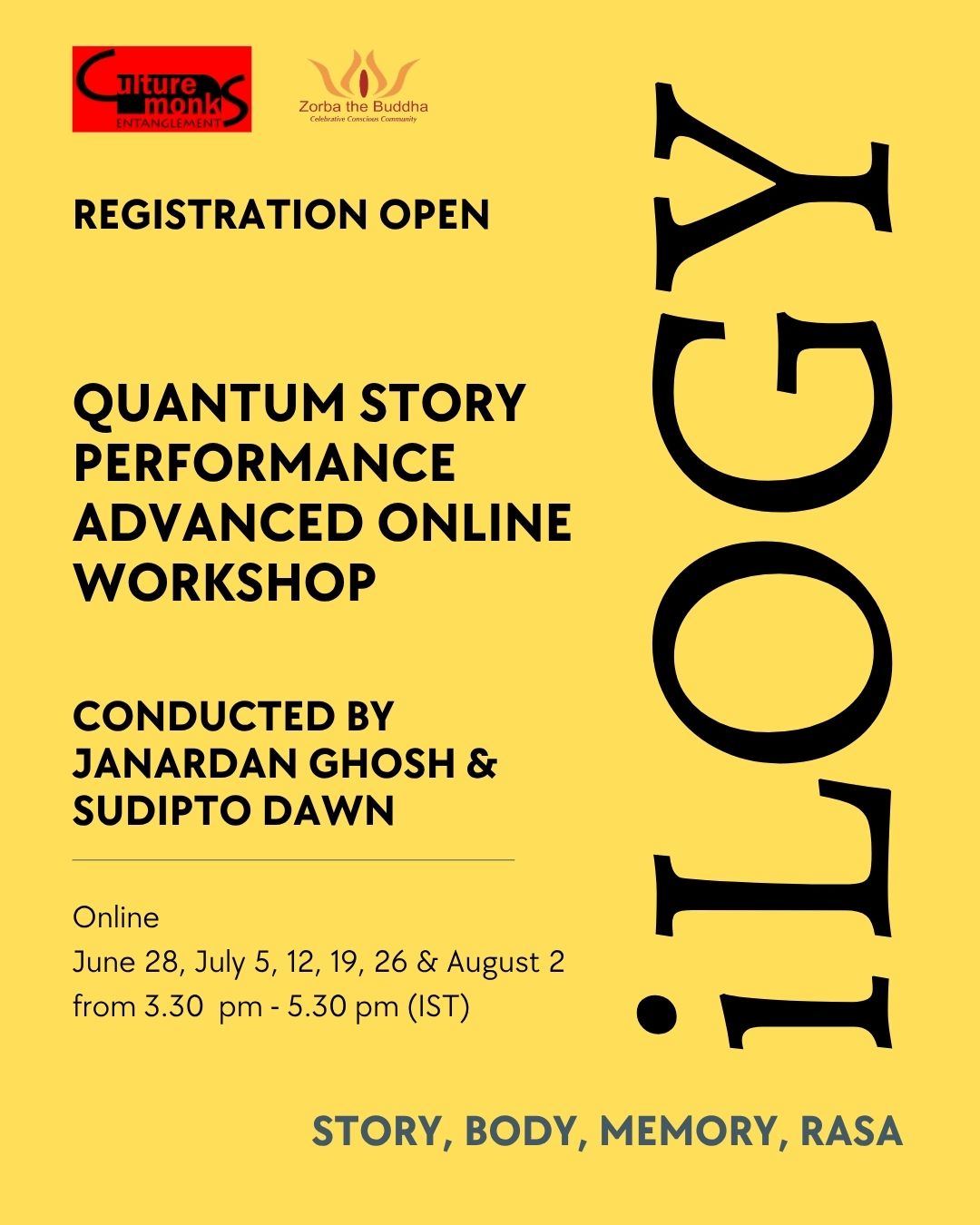
iLOGY advanced online workshop
The practice of embodying the story. The physical expression of an inner experience is termed as anubhava by Bharata in the Natya Shastra.
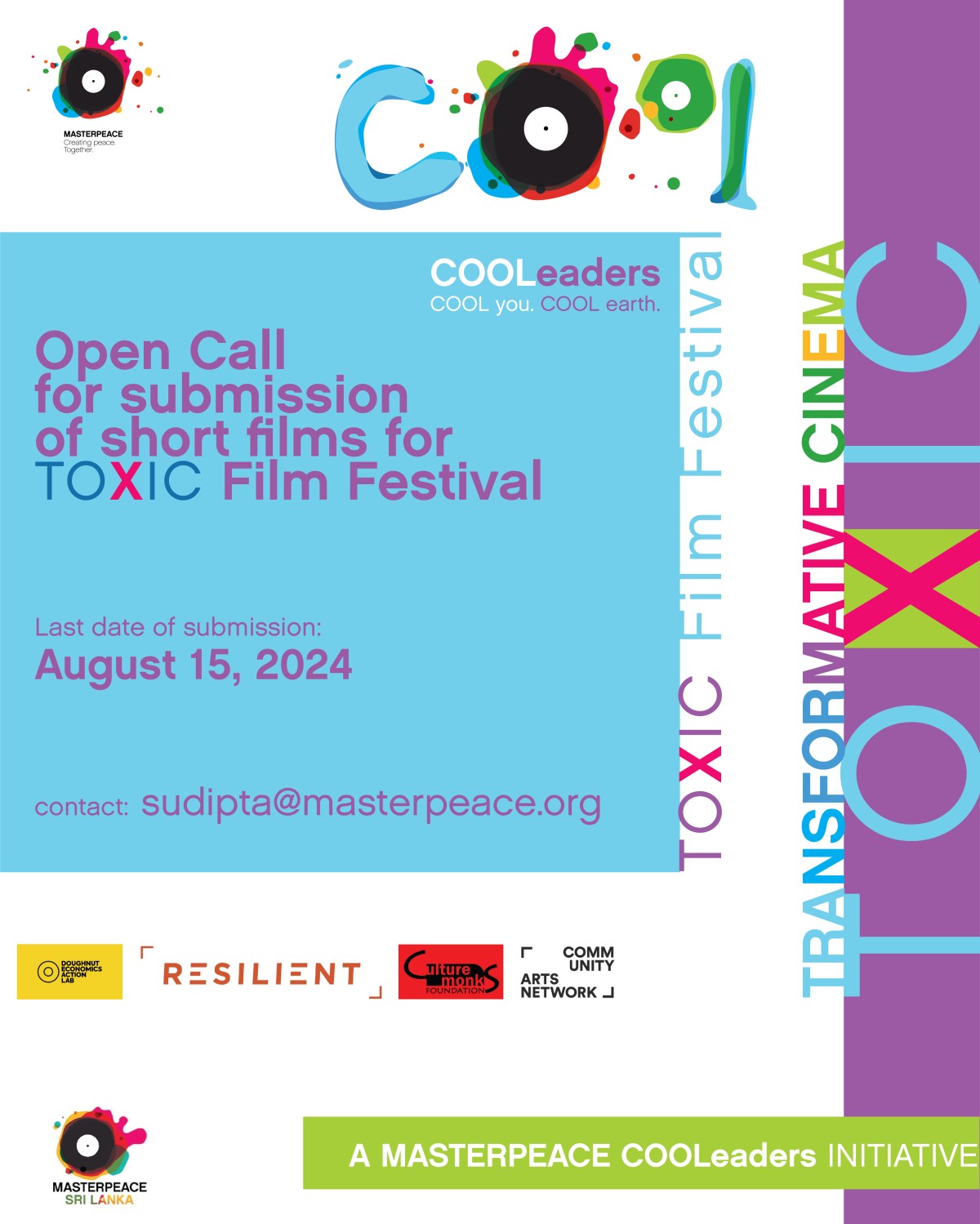
Open Call for TOxIC Short Film Festival
The TOxIC Short Film Festival, hosted by MasterPeace Global COOLeaders program, seeks films that address toxicity in various aspects of life. Submissions are open until May 15, 2024. EURO 5000 prize money.
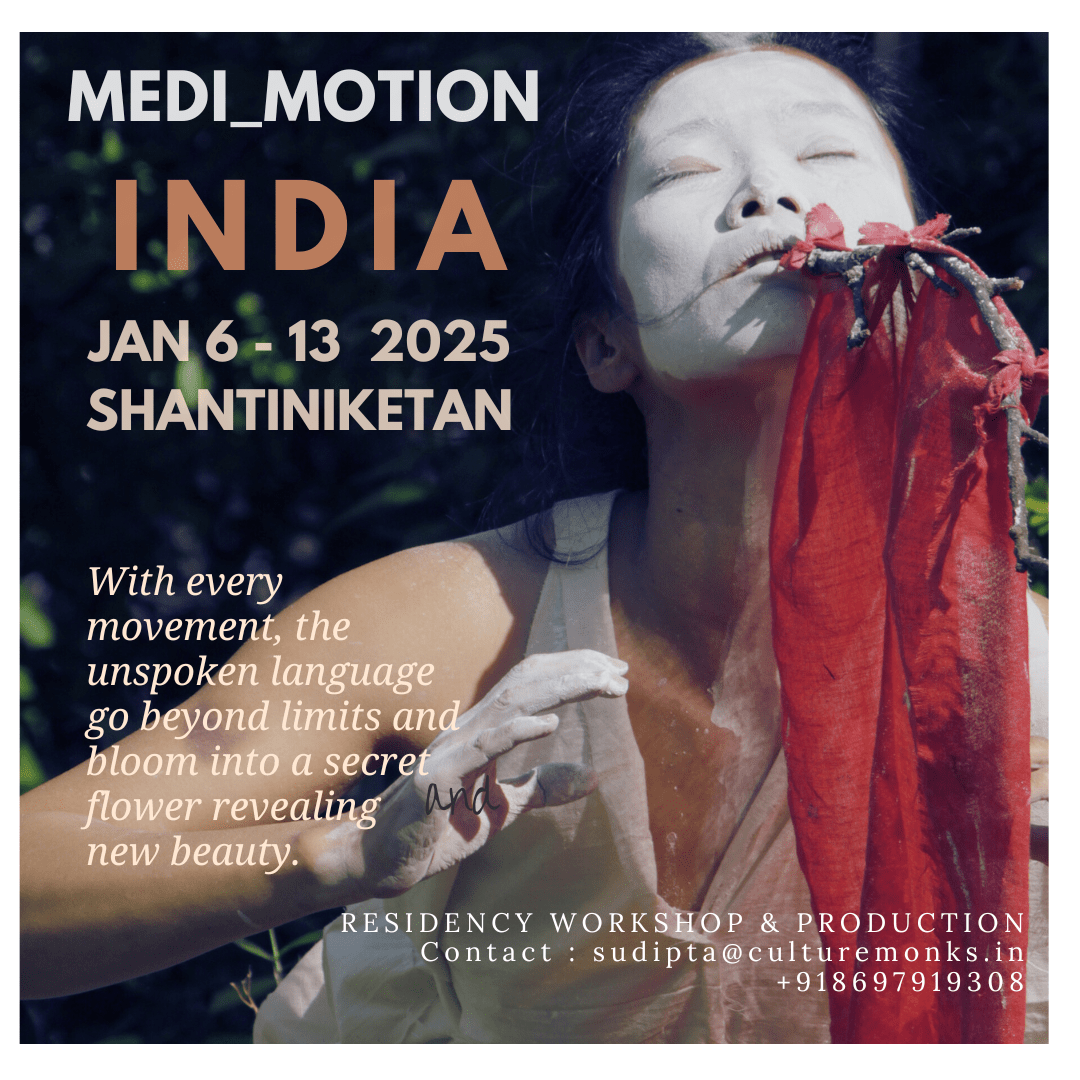
Medi_Motion: Workshop Residency in Shantiniketan, India led by Gio Ju
“The self is only a threshold, a door, a becoming between two multiplicities.”
This is an open call for dancers, movement artists, actors, movement based therapist , theatre practitioners, performance researchers and also for people who are interested to explore their expressive and creative self through this practice which involves movement and meditation.
7…
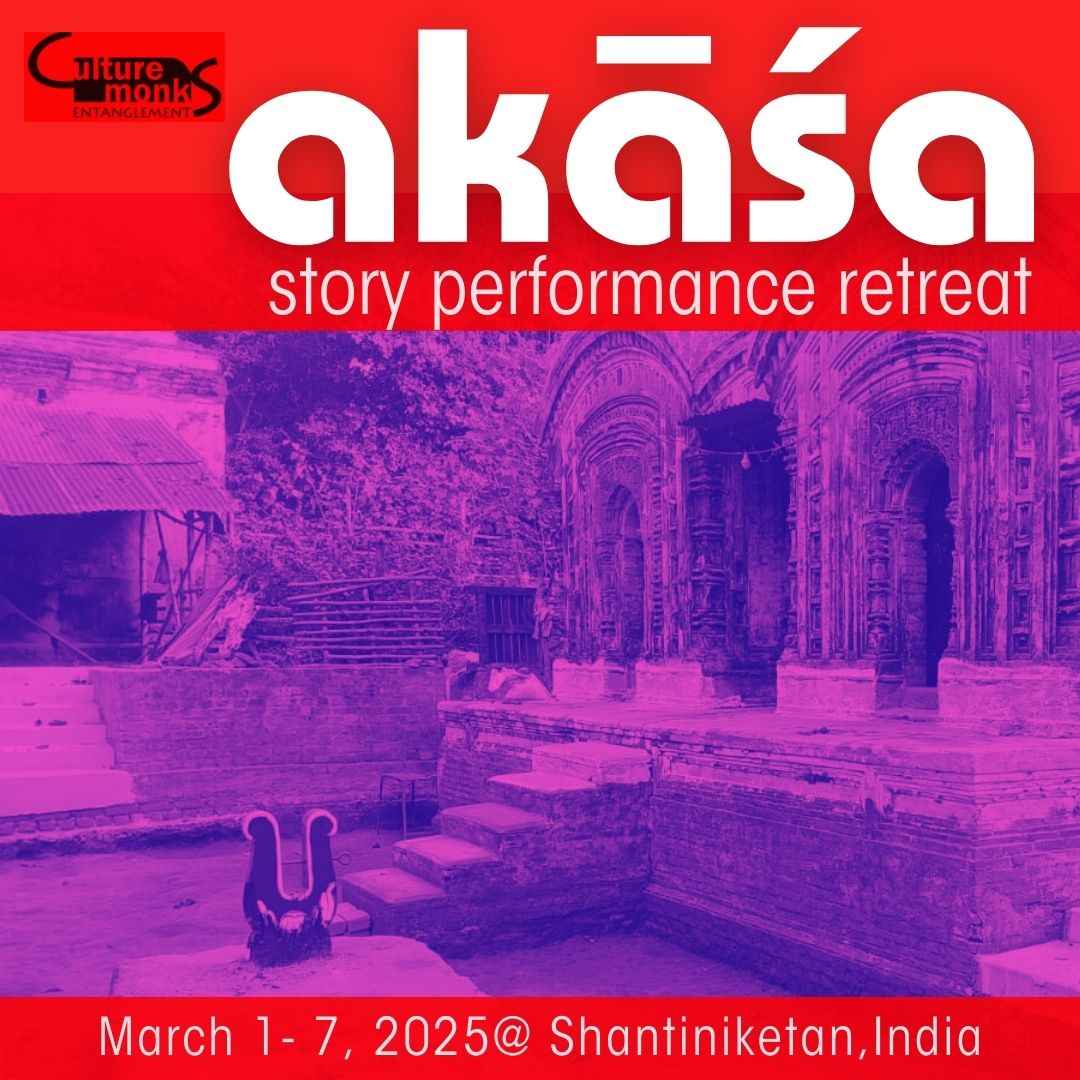
ākāśa international story -performance retreat in Shantiniketan, India
An international ĀKĀŚA international storyperformance rural residency in Shantiniketan, India. Based on contemporary interpretation application of Indian aesthetics theories namely Natyashastra & Abhinayadarpanam. ĀKĀŚA storytelling workshop has been conducted over the last 8 years and more than 200 storytellers from around the world have participated in our workshops.
Visit the Book store for book suggestions


